100+ Books, 3 Sentences V: The Mysterious Novels (Among Other Genres)

I’ve done this 4 times before. You know what it’s about.

The Books I Read in 2025

I Don’t Have Enough Faith to be an Atheist (Norman L. Geisler and Frank Turek, 2004). Two apologists use several approaches–theology, psychology, sociology, science–to show extrabiblical evidence for the truth of Christianity. Pretty decent, except when they veered toward culture war crap.

Die, volume 4: Bleed (Kieron Gillen, 2021). Everyone’s on board: they all want out of Die. But they’ve got a big ol’ obstruction with one little question: “What am I for?” The TV Tropes page was extremely helpful in figuring out what the heck happened in this series.

Seraphina (Rachel Hartman, 2012; Seraphina #1). I’ve reviewed this one before, so check out the first installment. The sequel is a crime against humanity.

This Will Be My Undoing: Living at the Intersection of Black, Female and Feminist in (White) America (Morgan Jerkins, 2018). A series of essays about the trials and tribulations of being a black woman today. Quite uncomfortable, but then again, so is being black and female oftentimes.

Billy Summers (Stephen King, 2021). Ex-Marine Billy Summers has found a new job: making sure bad people can’t be bad anymore…by putting them on the business end of a gun barrel. He goes deep undercover for his final job before he puts down the weapons forever…which gives him enough time to remember what usually happens to hitmen who try to retire. JJ Abrams is in talks to produce a miniseries adaptation.

Near Death Experiences: The Science, Psychology and Anthropology Behind the Phenomenon (Anthony Peake, 2024). Pseudoscientific quack garbage given to me as a Christmas gift by one of my students. I treasure the gift, but at the same time I’m angry Anthony Peake wrote this trash for my student to waste money on.

Wrath of the Triple Goddess (Rick Riordan, 2024; Percy Jackson and the Olympians #7). Percy Jackson’s quest for three godly recommendation letters for admission to New Rome University continues. This time, it involves housesitting for goddess of magic Hecate, a flatulent ferret, exploding food, and spirits. Lots and lots of spirits.

White Sand, volume 1 (Brandon Sanderson, 2016). Kenton is at the bottom of the totem pole in the Sand Master tribe, which is extra embarrassing since his father runs the darn thing. But when a surprise attack leaves Kenton the only living Sand Master, Kenton must both master his sand powers and find who’s responsible for the slaughter.

Almost Time (Gary D. Schmidt and Elizabeth Stickney, 2020). A short, sweet story of a boy eager to tap maple trees with his father.

Tiny Beautiful Things: Advice on Love and Life from Dear Sugar (Cheryl Strayed, 2012). Cheryl Strayed has written some books, but she’s most famous as the Sugar in the “Dear Sugar” advice column. In the best of both worlds, she collects some of her most advice pieces in a book.

The Intruder (John Townsend, 1969). A stranger shows up on young Arnold Haithwaite’s door, claiming to be a long-lost relative. Whether he’s telling the truth or not, he tries to take over Arnold’s life, but our boy doesn’t play that.

Izzy, Willy-Nilly (Cynthia Voigt, 1986). After losing her leg in a car accident, Izzy Lingard must learn to live life again. She’ll get help from the most unexpected people.

Dragon Hoops (Gene Luen Yang, 2020). Gene Luen Yang is an author, an artist and a teacher, not an athlete…until the Bishop O’Dowd Dragons, the basketball team at the Catholic school he taught at, formed a dream team that could potentially win the championship trophy previous teams had fumbled eight times before. Part play-by-play, part history of basketball, part biography of Yang’s own personal conflicts, all GOATed.

White Picket Fences (Amy Julia Becker, 2018). A white woman reflecting on privilege. That’s a good thing by the way.

A Room Made of Windows (Eleanor Cameron, 1971; Julia Redfern #1). The worst book I read this year. A nothing narrative about a whining brat of a main character.

Sinner (Ted Dekker, 2008; The Paradise Trilogy #3). In the 2030s, the United States is on the verge of…something not good, due to the population taking identity politics to its violent extremes. In the chaos are three people with extraordinary power: Billy Rediger, Darcy Lange, and Johnny Drake. Only their power can stop the being of pure evil Billy accidentally conjured up as a child.

The 49th Mystic (Ted Dekker, 2018; Beyond the Circle #1). Thanks to experiments by her father, blind Rachelle Matthews can see, but she also begins to flip between two worlds. Her interdimensional travels draws the attention of Vlad Smith, a sinister drifter who wants to shatter the utopic illusion of the remote town Rachelle calls home.

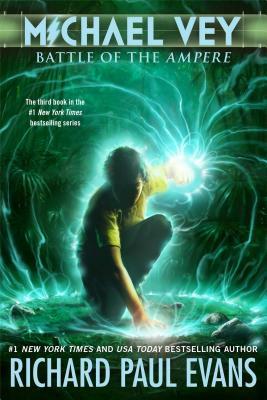
Michael Vey: The Colony (Richard Paul Evans, 2024; Michael Vey #10). The Electroclan have one more obstacle standing in their way: the Colony, a group of electrically-powered children led by the unhinged, ridiculously powerful Chispa who call the most dangerous part of Peru home. The Colony have Abigail, so to their hideout the clan goes. Only Michael knows that this will be their last adventure.

Teenage Guys: Exploring Issues Adolescent Guys Face and Strategies to Help Them (Steve Gerali, 2006). A Christian sociology book shockingly ahead of its time, talking about things like homosexuality and homophobia, the myth (and yes, it is a myth) that men and women can’t be friends, the flaws in books about Christian masculinity like Wild at Heart and Every Young Man’s Battle, and the flaws in purity culture. In 2006.

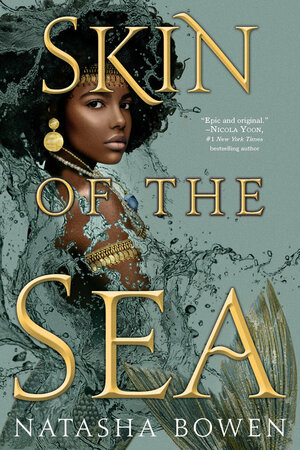
Skin of the Sea (Natasha Bowen, 2021; Of Mermaids and Orisa #1). Simi is a Mami Wata, a mermaid who captures the souls of those who die at sea and directs them to the afterlife. When Simi without thinking saves the life of a young man thrown overboard a slave ship, she violates an ancient decree, and she must go to the Creator for forgiveness. The Creator…isn’t easy to get to.
Far Sector (N.K. Jemisin, 2021). Newly ringed Green Lantern Jo Mullein has been assigned to the City Enduring, a city-planet on the edge of the universe that hasn’t had a crime in centuries. Then a murder shatters the utopia, and Jo needs to find the killer before the City descends into anarchy.

This Book is Anti-Racist: 20 Lessons on How to Wake Up, Take Action, and Do the Work (Tiffany Jewell, 2020). Baby’s first antiracist book.

Gwendy’s Final Task (Stephen King, 2022; The Button Box #3). The Button Box comes back to Gwendy Peterson one more time, and according to its handler Richard Farris, it’s becoming too dangerous. There’s only one solution: Gwendy must get on a rocket and dispose of the box in space, where no one can ever retrieve it. But there are powerful people who want the Box, people who can pay their way onto a space expedition…

The House in the Cerulean Sea (TJ Klune, 2020; Cerulean Chronicles #1). Linus Baker’s a social worker at the Department in Charge of Magical Youth, the government entity that [supposedly] sees to the well-being of magical creatures. He’s dispatched to a remote island to check on magic children in the care of the mysterious Arthur Parnassus. Linus finds something unexpected on Arthur’s island: a possible end to his lonely life.

The Call (Peadar Ó Guilín, 2016; Grey Land #1). In a dystopian version of Ireland cut off from the rest of the world, teens at random receive the Call: being yanked into the Grey Land, home of the Sidhe fairies who take out their anger at humans banishing them to their hellscape home by mutilating beyond recognition any human they get their hands on, and have to survive 24 hours without…being mutilated beyond recognition. At her survival school, Nessa, crippled by childhood polio, is written off by her classmates as a lost cause whenever her Call comes. She might not have to wait until her Call to find out…

White Sand, volume 2 (Brandon Sanderson, 2018). To save what’s left of the Sand Masters, Kenton must learn some diplomatic skills and learn them yesterday. He also has to survive the wave of assassins an unknown enemy keeps sending his way. His best chance of survival is the most unexpected of allies.

A Long Road on a Short Day (Gary D. Schmidt and Elizabeth Stickney, 2020). A cute little story about a dad and a son trying to trade with their neighbors for a cow. …that’s it.

The Runner (Cynthia Voigt, 1985; Tillerman Cycle #4). Bullet Tillerman runs, partly because he likes it, mostly because the trails are his escape from his domineering father and fracturing family. When his running coach asks him to coach another teammate, Tamer Shipp, Bullet feels a cramp in his style. But running alongside Tamer will teach Bullet some unexpected and much-needed lessons.

Never Split the Difference: Negotiating as If Your Life Depended on It (Chris Voss, 2016). A former FBI hostage negotiator applies what he learned from saving lives and capturing the bad guys to non-saving lives and non-capturing the bad guys life situations.

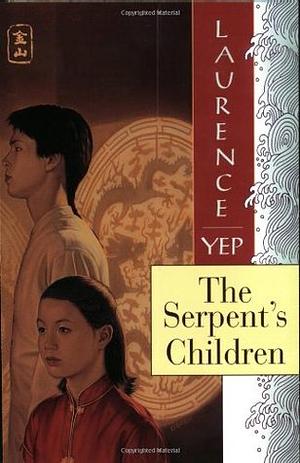
The Serpent’s Children (Laurence Yep, 1984; Golden Mountain Chronicles #1). Their neighbors call Cassia and Foxfire “the serpent’s children,” which is supposed to be an insult, but Cassia wears it as a badge of honor. Serpents are clever, and with a father wounded in the fight to free China from the grip of invaders and a brother who wants to leave China entirely, Cassia will need to be crafty as a serpent to keep her family together.
Not Like Other Girls (Meredith Adamo, 2024). Jo-Lynn Kirby fell from grace when one of her so-called friends leaked nude photos of her, and she lost her place in the popular circle at school as a result. Then her former best friend Maddie disappears after telling Jo-Lynn she’s in trouble, and Jo-Lynn is seemingly the only one who cares. As she teams up with an old friend and starts to realize Maddie had a loooooooooooooooooooooooot of secrets, she’s also forced to confront her own dark past.

A Good and Perfect Gift (Amy Julia Becker, 2011). Amy Julia Becker’s first daughter Penny was born with Down syndrome. A Good and Perfect Gift is her story of reckoning emotionally and spiritually with having a special needs child, and realizing she was…read the title.

Soul of the Deep (Natasha Bowen, 22; Of Mermaids and Orisa #2). To save those she loved, Simi made a bargain with the god of the dead and now resides in the darkest part of the ocean. Then she learns that her new master lied to her, and his lie threatens the whole world. Simi has to partner up with an old enemy if she wants to stop what’s coming.

Rise of the Mystics (Ted Dekker, 2018; Beyond the Circle #2). The fate of the world is in Rachelle Matthews’ hands. She must find five seals, or else both worlds she inhabits will plunge into eternal darkness.

Black Ice (Becca Fitzpatrick, 2014). Britt and her best friend Korbie inadvertently find themselves hostages of two criminals on the run when the four of them are stranded together in a blizzard. The writing was terrible, the dialogue felt AI-generated, the romance (because of course there’s romance) was predictable and terrible, and the villain had one of the dumbest motivations I’ve ever heard. Best audiobook experience of 2025!

I Was Their American Dream: A Graphic Memoir (Malaka Gharib, 2019). The autobiography of Malaka Gharib growing up with a foot in two radically different worlds: the world of her Egyptian Muslim father and the world of her Filipino Catholic mother.

The End of White Christian America (Robert P. Jones, 2016). A well-written but Nostradamian book about why White Christian America’s influence is waning. It’s Nostradamus-esque because it was published mere months before Donald Trump’s first election to the Presidency.

Stamped from the Beginning: A Graphic History of Racist Ideas in America (Ibram X. Kendi and Joel Christian Gill, 2023). The graphic novel version of Kendi’s Stamped from the Beginning. Pretty good.

Fairy Tale (Stephen King, 2021). Charlie Reade’s helping out his elderly neighbor changes his life in a way he never expects. His neighbor is his own grandfather, made young by journeying into a world belowground that he’s built a storage shed over the entrance to. After his neighbor dies, Charlie journeys with his elderly dog to the land below to use the magic to make his dog young…and finds himself in a classic fight between good and evil.

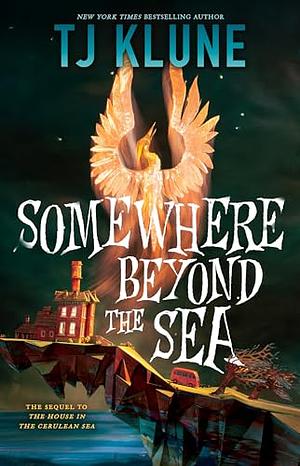
Somewhere Beyond the Sea (TJ Klune, 2024; Cerulean Chronicles #2). Arthur Parnassus, once a magical misfit drifting through life, now has six beautiful adopted children and the man of his dreams at his side. But then a seventh kid, one who defies everything Arthur’s taught the children, comes to him, and an anti-magic politician makes Arthur and his family Public Enemy #1. Arthur’s family is under a lot of pressure, pressure that will either bring them closer together than ever…or crush them all to smithereens.
The Invasion (Peadar Ó Guilín, 2018; Grey Land #2). Nessa has survived her Call, but now she has a new problem: with the Sidhe coming closer and closer to being able to return to Earth, there’s a witch-hunt looking for supposed traitors, and Nessa’s sure looking suspicious. Nessa is exiled back to the Grey Land, but to no avail: the barrier falls, and the Sidhe flood back into Ireland, ready to take back the land and mutate the remaining Irish into their labor animals. Only Nessa, trapped in the Grey Land, can end all of this.

White Sand, volume 3 (Brandon Sanderson, 2019). Kenton rallies his allies and prepares to speak before the council in the name of keeping the Sand Masters together. But the unknown money man behind the Sand Masters’ massacre isn’t done with him yet…

Just Like That (Gary D. Schmidt, 2021). After her best friend’s death in a car accident, Meryl Lee Kowalski is sent off to a snooty all-girls boarding school in Maine. At the same time, Matt Coffin, who’s on the run from dangerous people who killed his best friend, arrives in Maine, ready to pull up his stakes as soon as his pursuers pick up his trail. Two lonely, grieving kids meet by chance and find solace in one another in a novel that’s way funnier and more lighthearted than my description makes it sound.

Jackaroo (Cynthia Voigt, 1985; Tales of the Kingdom #1). In a kingdom full of corruption, the masked Jackaroo is the boogeyman of the rich and greedy. Gwyn thinks he’s a myth until she finds shelter in the first house she sees during a blizzard and finds Jackaroo’s outfit hidden inside. So she figures: if Jackaroo is…incapacitated? dead? …is something, she’ll bring him–her now–back to life.

Mountain Light (Laurence Yep, 1985; Golden Mountain Chronicles #2). Squeaky, outcast among his family and a village, meets the love of his life: Cassia, the protagonist of The Serpent’s Children. There’s one problem, though: their families have warred with one another for generations. To prove himself to himself, to Cassia, to both of their families, Squeaky does the unthinkable: packs up and heads for America, where Foxfire has been for years, sending home letters telling of a “Golden Mountain.”

On Our Way Home from the Revolution: Reflections on Ukraine (Sonya Bilocerkowycz, 2019). Ukrainian-American intellectual Sonya Bilocerkowycz was in Ukraine when Russia annexed Crimea. Reflecting on her experience on the ground, her older relatives’ experiences, and Ukraine’s history as a whole, she spins out some pretty interesting, if slightly surreal, essays.

Magic Has No Borders (Tahir Abrar, Naila Azad, Tanaz Bhathena, Tracey Baptiste, Olivia Chadha, Preeti Chhiber, Sayantani DasGupta, Nikita Gill, Shreya Ila Anasuya, Naz Kutub, Sangu Mandanna, Sabaa Tahir, Swati Teerdhala, edited by Samira Ahmed and Sona Charaipotra, 2023). A collective of South Asian-American authors put their heads together and spin out an anthology of South Asian mythology-inspired stories with a modern twist.

Forever… (Judy Blume, 1975). Katherine and Michael are each other’s firsts: their first relationship, and eventually, each other’s first lover. Their parents, seeing the intensity of their relationship, encourage them to spend a summer apart and see how they feel once they’re back together. Their feelings can survive a few months of separation…right?

Over Sea, Under Stone (Susan Cooper, 1965; The Dark Is Rising Sequence #1). A trio of siblings find an old map in their vacation home. The map leads to none other than the Holy Grail, and drops them into an age-old war between good and evil. In a strange coincidence, one of six books I read this year having to do with Arthurian legend.

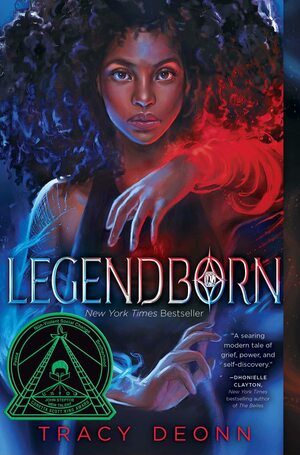
Legendborn (Tracy Deonn, 2020; The Legendborn Cycle #1). Going to a summer program at the University of North Carolina at Chapel Hill was supposed to be how Bree Matthews coped with her mother’s death in a hit-and-run. Instead, after being the only one who could see people build weapons from nothing to fight monsters only she can see, Bree inadvertently joins a secret society descended from King Arthur’s Round Table. The second of six books I read this year having to do with Arthurian legend.
Love Does: Discover a Secretly Incredible Life in an Ordinary World (Bob Goff, 2012). An expert in finding the extraordinary in the ordinary tells stories about doing so to encourage you to do the same.

Killers of the Flower Moon: The Osage Murders and the Birth of the FBI (David Grann, 2017). Striking oil on their land made the Osage Native Americans the richest people in the world, but a series of murders made it clear someone wanted their status for their own. The search for the Osage killer was the first major investigation by what would eventually become the FBI. Martin Scorsese adapted the book into film in 2023, starring Leonardo DiCaprio, Robert de Niro and Lily Gladstone.

White Too Long: The Legacy of White Supremacy in American Christianity (Robert P. Jones, 2020). The long, sad history of white supremacy twisting God’s word for its own ends.

Holly (Stephen King, 2023; Holly Gibney #4). After encountering two eldritch abominations in a row, the next case Holly Gibney takes is a simple missing person case…but this is a Stephen King novel, so Holly’s gumshoeing puts her on a crash course with a couple that practice a horrifying form of alternative medicine.

Kafka: A Graphic Novel Adaptation (Nishioka Kyoudai, 2010). A surreal comic-book adaptation of Kafka’s already-surreal stories.

One Smart Sheep (Gary D. Schmidt and Elizabeth Stickney, 2021). A comedy of errors about a sheep getting lost after wandering into a moving truck.

Tristan and Iseult (Rosemary Sutcliff, 1971). A surprisingly solid retelling of the Arthurian legend of the forbidden love affair between Tristan, wandering Knight of the Round Table, and Iseult, destined beloved of King Mark of Cornwall. The third of six books I read this year somehow related to Arthurian legend.

Dragon’s Gate (Laurence Yep, 1993; Golden Mountain Chronicles #3). Otter travels across the ocean to America, the land of the Golden Mountain, where his father Squeaky and uncle Foxfire have been making a fortune. He discovers that all that glitters is not gold.

A Place to Hang the Moon (Kate Albus, 2021). After their grandmother dies, William, Edmund and Anna search for a new home amidst the London Blitz.

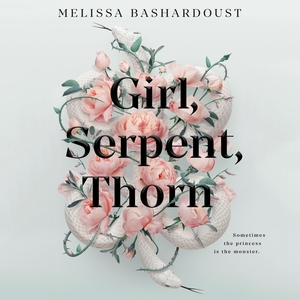
Girl, Serpent, Thorn (Melissa Bashardoust, 2020). From her birth, Princess Soraya’s been poisonous: any living thing that touches her skin dies. She learns that beneath the castle is an imprisoned demon who knows how to lift her curse. Soraya’s attempts to be free opens a can of worms demons.
Naamah (Sarah Blake, 2019). The story of the Biblical flood, told from the POV of Noah’s wife Naamah. Features a lot of lesbian sex, a horny angel, and a David Lynch-esque feel, which is not something I ever thought I could say about a story based on a Bible story.

Bloodmarked (Tracy Deonn, 2022; The Legendborn Cycle #2). The Legendborn are supposed to protect the world from the forces of evil. As Bree emerges as the unexpected host of King Arthur’s spirit and new leader of the Legendborn, she starts asking a new question: who protects the Legendborn from each other? The fourth of six books I read this year somehow related to Arthurian legend.

Selfies (Craig Detweiler, 2018). Inspired by the backlash a teenage girl faced for taking a smiling selfie in Auschwitz, Craig Detweiler discusses humanity’s history of seeking the imago Dei through art, including selfies.

Uncovering Happiness: Overcoming Depression with Mindfulness and Self-Compassion (Elisha Goldstein, 2015). A book I added to my reading list when I was in a much worse state of mind. Decent read, but I was glad to say I didn’t really feel like I needed it.

The Color of a Lie (Kim Johnson, 2024). After his sister is killed in a firebombing of their old Chicago home, light-skinned Calvin and his family relocate to an all-white Pennsylvania suburb and pass as white. Calvin soon tires of hiding his true self, not helped by Lily, a girl who’s openly desegregating Calvin’s new all-white school. Together, the two of them will uncover the ugly secrets hiding in Calvin’s seemingly idyllic neighborhood.

The Black Friend: On Being a Better White Person (Frederick Joseph, 2021). Antiracist books don’t always have to be serious.

Kiki’s Delivery Service (Eiko Kadono, 1985). Kiki’s flying on a broom with a black cat hanging off the back, and yet it took the narrator saying so to make me realize this was a book with a witch as the main character. Famously adapted to film by Studio Ghibli, which I obviously haven’t seen.

The Village Beyond the Mist (Sachiko Kashiwaba, 1975). Lina travels to a rural village, finds out that it doesn’t exist, and then finds out that it does exist but she has to use a magical umbrella to get to it. If this premise sounds familiar, it’s because Studio Ghibli adapted this into Spirited Away. (August was Studio Ghibli month in my book club.)

You Like It Darker (Stephen King, 2024). King’s most recent foray into short stories and novellas. Features my new favorite King novella, “Danny Coughlin’s Bad Dream.”

Friday Foster: The Sunday Strips (Jim Lawrence and Jordi Longarón, 2021). Friday Foster was the first ever comic strip to feature a black woman as the main character and got a movie adaptation with Pam Grier in the lead role, but after its ending in 1974, the strip faded into obscurity. The Sunday Strips is the first ever collection of Friday Foster strips.

Dancing Carl (Gary Paulsen, 1983). Local eccentric Carl dances on the ice rink with no skates. Two local boys, Willie and Marsh, stumble on the tragic reason why.

Celia Planted a Garden: The Story of Celia Thaxter and Her Island Garden (Gary D. Schmidt, 2022). The story of poet and gardener Celia Thaxter, whose island home was a vacation spot for authors of her time like Longfellow, Whittier and Hawthorne.

The Traitor (Laurence Yep, 2003; Golden Mountain Chronicles #4). Michael Purdy is an outcast in his Wyoming mining hometown for being a bastard; Joseph Young is hated in the Chinese part of the same town for being too Chinese for the white people and too American for the Chinese. The two outcasts befriend each other. Only time will tell if their newfound friendship can survive racial tensions erupting.

Nothing Else But Miracles (Kate Albus, 2023). If I had a nickel for every audiobook of a Kate Albus novel I listened to in 2025 about a trio of siblings trying to find a place to live after something happens to their legal guardian during WWII, I’d have two nickels, which isn’t a lot, but it’s weird that it happened twice. This one is set in ‘MURICA, and therefore the MCs aren’t a couple of tea-guzzling, monarchy-simping, seasoning-fearing, BBC-watching, country-colonizing, metric system-using, Piers Morgan and Katie Hopkins-originating Brits. *eagle screech*

Clean Air (Sarah Blake, 2022). A dystopian novel set a decade after the Turning, when humanity was forced to live in filtered domes when the trees, prompted by climate change, suffocated the bulk of humanity by overproducing pollen. Now, in Izabel’s dome, someone has been slashing people’s protective dome homes and leaving the inhabitants to the mercilessness of the deadly pollen, and worse yet, her daughter seems to be having conversations in her sleep with the killer.

Storm Front (Jim Butcher, 2000; The Dresden Files #1). Harry Dresden, wizard, private eye, and consultant for the Chicago Police Department on all things weird, is called to the scene of a double homicide of a decidedly magical nature. There are Laws of Magic, someone seems determined to break all of them, and worse yet, governing power the White Council believes Harry’s the culprit. To prevent his death, either by a rogue wizard or the business end of a White Council Warden’s sword, Harry needs to solve the mystery.

The Dark Is Rising (Susan Cooper. 1973; The Dark Is Rising Sequence #2). Seventh son of a seventh son Will Stanton has an…interesting Christmas holiday as he finds himself on the frontline in a centuries-long war between good and evil. The fifth of six books I read last year somehow related to Arthurian legend. Has a godawful movie adaptation that you shouldn’t give the time of day.

The Library of the Unwritten (A.J. Hackwith, 2019; Hell’s Library #1). Claire is the librarian for the Library of the Unwritten, a library in an obscure corner of Hell where every book that is or will be written is shelved. An excursion back to Earth to retrieve a runaway character turns into a struggle for an artifact that could end the war between Heaven and Hell.

Oathbound (Tracy Deonn, 2025; The Legendborn Cycle #3). After one too many betrayals, Bree abandons the Legendborn and seeks tutelage from their archenemy. The Legendborn try to find her, while also trying to solve the mystery of a string of dead Merlins. The sixth and last book I read in 2025 somehow related to Arthurian legend.

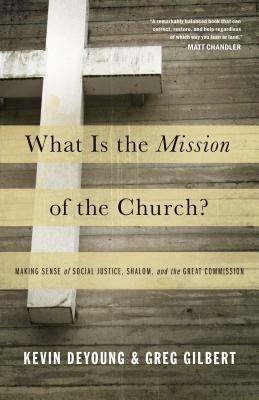
What Is The Mission of the Church?: Making Sense of Social Justice, Shalom, and the Great Commission (Kevin DeYoung and Greg Gilbert, 2011). A book about how Christians are called to social justice. Dense, but interesting.
Empire of Wild (Cherie Dimaline, 2020). Joan has been searching for her husband Victor since he disappeared from their Métis community a year earlier. By chance, Joan visits a traveling Christian ministry and sees Victor preaching, but he claims to not know her when she introduces herself. There’s a rougarou; didn’t know how to mention that organically.

The Sound and the Fury (William Faulkner, 1929). Faulkner’s famously oblique magnum opus. If I hadn’t read the SparkNotes and TV Tropes pages, I wouldn’t have had a clue what was happening. …actually, having read the SparkNotes and TV Tropes pages, I barely know what the f*ck happened in this book.

The Unfinished (Cheryl Isaacs, 2024; The Unfinished #1). High school runner Avery comes across a mysterious pond of black water and then makes like a tree when her reflection smiles back at her. People start disappearing, including her best friend, and then strange, humanoid figures begin populating her small town. It’s the black water, she knows it, and if she wants the vanished back, she’ll have to solve the mystery of what the pond is.

They Wish They Were Us (Jessica Goodman, 2020). Jill Newman is a Player, the elite at the elite Gold Coast Prep, but her position came at a cost: her best friend Shaila was murdered by her boyfriend Graham back in freshman year…or was she? She begins receiving text messages proclaiming Graham’s innocence, and she feels she has no choice but to investigate. But there are a lot of people who want the chapter of Shaila’s murder to stay closed; can Jill find the truth without throwing away she’s worked for?

Hood Feminism: Notes from the Women That a Movement Forgot (Mikki Kendall, 2020). *in the voice of the “Tendernism” dude* WOMANISM. *throws glasses away, walks off*

Never Flinch (Stephen King, 2025; Holly Gibney #4). There’s a serial killer loose in Holly Gibney’s town, avenging an innocent man wrongfully convicted and subsequently murdered in prison. Holly would be on the case, but she’s already on the job as security for a controversial feminist speaker with a stalker who’s getting bolder. But fate (or the author; take your pick) has a funny way of making paths cross.

The Spring Rider (John Lawson, 1968). An incomprehensible pile of Confederate apologist trash. It may not be the worst book I’ve ever read, but it’s in the top 5.

A Long Walk to Water (Linda Sue Park, 2010). In 1985, Salva flees his village when the Sudanese Civil War comes to his front door and becomes a leader of the Lost Boys, thousands of boys and young men who wander through Sudan and into neighboring countries looking for a permanent landing spot. In 2008, Nya walks hours every day to get water for her family. Their stories eventually intersect.

Hatchet (Gary Paulsen, 1986; Brian’s Saga #1). Brian Robeson is on a small plane to see his estranged father deep in the Canadian wilderness, but the pilot dies of a heart attack and Brian barely manages to crash-land deep in the sticks. No one knows where he is, and no one is coming to save him. But Brian has everything he needs to survive: a gifted hatchet.

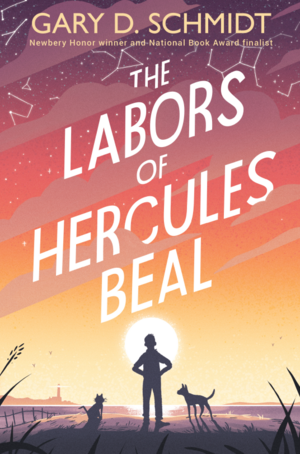
The Labors of Hercules Beal (Gary D. Schmidt, 2023). Hercules Beal is given a challenge by a teacher at his new school: accomplish his own version of the mythological Hercules’ 12 labors.
Light Brigade (Peter J. Tomasi, 2004). An American squadron in WWII get recruited into a new battle: between angels and demons, for the fate of the universe.

The Complete Fairy Tales (Oscar Wilde, 1888). Fairy tales that Oscar Wilde wrote. Most of them ticked me off.

Dragonwings (Laurence Yep, 1975; Golden Mountain Chronicles #6). Moon Shadow emigrates from China to San Francisco to live with the father he’s never met. His father claims to have once flown with the dragons of their lands and wants to do it again…with a plane. This is a book about building planes.

Rebellion 1776 (Laurie Halse Anderson, 2025). As America finally wins its independence from those tea-guzzling, monarchy-simping, seasoning-fearing, wrong side of the road-driving, school shooting joke-making BRITS, Elsbeth Culpepper has a full plate. Her father has disappears, her best friend joins the Army, a man she nursed back to health won’t stop bothering her, and smallpox–the same smallpox that killed her mother and brothers–prowls like a predator. America didn’t come easy, and neither will a resolution for all of Elsbeth’s problems.

Let’s Not Live on Earth (Sarah Blake, 2017). A very well-done collection of feminist poetry, plus a feminist novella.

Fool Moon (Jim Butcher, 2001; The Dresden Files #2). Six months after stopping a heart-exploding wizard, Harry Dresden has a new challenge: werewolves. …that’s it: this is the werewolves Dresden Files book.

Grave Peril (Jim Butcher, 2001; The Dresden Files #3). Something is casting spells that torture mortals and spirits alike, a young woman shows up in Harry Dresden’s office asking for protection from…something, one of Harry’s worst enemies invites him to a party, and…something, maybe the same something chasing the young woman, attacks Harry in his dreams, steals some of his magic, and starts wreaking havoc wearing his face. …have I mentioned Harry Dresden’s life is crazy? Harry Dresden’s life is crazy.

Pilgrim at Tinker Creek (Annie Dillard, 1974). Annie Dillard spent a year exploring Tinker Creek, in Virginia’s Blue Ridge Mountains, and then wrote a book about exploring Tinker Creek, in Virginia’s Blue Ridge Mountains.

The Marrow Thieves (Cherie Dimaline, 2017; The Marrow Thieves #1). In a dystopian Canada, one of the consequences of global warming: non-indigenous people can’t dream. Indigenous people are kidnapped en masse and killed for their marrow, which [allegedly] lets people dream again. Frenchie and his found family flee from the “recruiters” and seek somewhere where they’ll be safe.

The Only Good Indians (Stephen Graham Jones, 2020; The Only Good Indians #1). Ten years ago, four desperate young Blackfoot men–Ricky, Gabe, Lewis and Cassidy–went illegally elk hunting and killed a pregnant deer when they did. Years later, the elk’s vengeful spirit emerges, wearing all kinds of faces to make the four suffer. I expected a completely different story, but enjoyed what I did get.

The Archive of the Forgotten (A.J. Hackwith, 2020; Hell’s Library #2). After Hell’s assault on the Library of the Unwritten, librarians Claire and Brevity try to rebuild. A pool of ink, seemingly leaking from books destroyed in the attack, leave Claire and Brevity divided on how to proceed. Misadventures proceed.

…that’s it. Sorry this was 5 months late.
100+ Books, 3 Sentences IV: The Quest for Pages

Books. I read them. SUMMARIES!

The Books I Read in 2024

Robert McCloskey (Gary D. Schmidt, 1990). The biography of Robert McCloskey, a children’s author most famous for writing the award-winning Make Way for Ducklings.

Calling a Wolf a Wolf (Kaveh Akbar, 2017). A collection of poetry about religion, addiction, sexuality and ethnic identity. I’m not a poetry person at all, so when I say this collection is good, believe me.

School Trip (Jerry Craft, 2023; New Kid #3). Jordan Banks and his friends are excited for a school trip in Paris. But some mischievous upperclassmen switching around the paperwork for what teacher goes on which trip prefaces personal tensions between the kids coming to a boil. Will jumping countries jump-start beef?

Dear Highlights: What Adults Can Learn from 75 Years of Letters and Conversations with Kids (Christine French Cully, 2021). A compilation of letters kids have written to the “Dear Highlights” column in Highlights magazine. Warmed the cockles of my heart.

Michael Vey: The Final Spark (Richard Paul Evans, 2017; Michael Vey #7). Michael Vey is dead. The rest of the Electroclan are heartbroken, but the Elgen are still standing, so they can’t truly grieve until Dr. Hatch and the Elgen have been put down.

The Great Gatsby (F. Scott Fitzgerald, 1925). One of the most famous novels of the 20th century chronicles the downfall of Jay Gatsby, a self-made millionaire whose obsession with a woman he loved brings him to ruin. Adapted to film multiple times, most recently in 2013, starring Leonardo DiCaprio as Gatsby, Tobey Maguire, and Carey Mulligan.

American Gods, volume 2: My Ainsel (Neil Gaiman, 2019, adapted from Gaiman’s American Gods, 2001). With their enemies hot on their tail, Mr. Wednesday drops Shadow off in the sticks of Wisconsin, telling him their enemies won’t track him into the middle of nowhere. But even in hiding, the weird comes knocking.

White Lies: Nine Ways to Expose and Resist the Racial Systems That Divide Us (Daniel Hill, 2020). Antiracist pastor Daniel Hill walks through the nine ways that racial discrimination sows divisiveness and hate.

What You’re Really Meant to Do: A Road Map for Reaching Your Unique Potential (Robert Steven Kaplan, 2013). Allegedly a book about finding your way forward in life. In reality, the most forgettable book I’ve read this year. I couldn’t tell you any of Kaplan’s advice with a gun to my head.

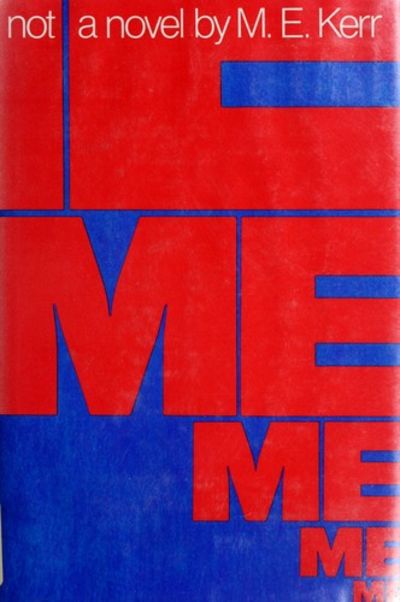
Me Me Me Me: Not a Novel (M.E. Kerr, 1983). The autobiography (or memoir–I don’t know the difference) of M.E. Kerr, the award-winning author with more pen names than the Wu-Tang Clan.

Gwendy’s Button Box (Stephen King and Richard Chizmar, 2017; The Button Box #1). Young Gwendy Peterson meets a strange man on a run, who gives her a box with eight buttons and two levers and then disappears. Gwendy experiments with the box and discovers the power the box contains. And how dangerous it is.

When the Ground is Hard (Malla Nunn, 2019). Last school year, Adele Joubert and her best friend Delia were part of the popular crowd at Keziah Christian Academy. This year, Delia ditches her and excommunicates her from the popular kids, and to make matters worse, Adele’s new roommate is school pariah Lottie Diamond. Though the circumstances aren’t ideal, a beautiful friendship will bloom, thanks to a copy of Jane Eyre, of all things.

The Lightning Thief (Rick Riordan, 2005; Percy Jackson and the Olympians #1). Bizarre events have happened to Percy Jackson all his life. One stormy summer night, when a monster from the Greek myths comes roaring out of the darkness and kidnaps his mother, he learns why: he’s a demigod, a son of the Greek sea god Poseidon. War is brewing between Poseidon and Zeus, and unless Percy finds a stolen treasure, he’ll be on the front lines.

Pilgrim’s Progress (Gary D. Schmidt, 2008; adapting John Bunyan’s Pilgrim’s Progress, 1678). Christian’s life in the City of Destruction feels meaningless: he wears a burden he can’t put down no matter how hard he tries and his family thinks he’s losing his mind. An Evangelist comes to him and invites him to travel to the Heavenly Gates, where he can lose his burden. Christian concurs, and heads for heaven in one of the most famous Christian works of all time.

Feed (M.T. Anderson, 2002). In the future, everyone who’s anyone has a Feed, a beefed-up version of the Internet accessed by brain microchip. For Titus and his friends, their Feeds getting hacked while on spring break at the moon is the first in a chain of disastrous dominoes falling. Fun fact: this was my fourth time reading Feed, and it won’t be my last.

Gwendy’s Magic Feather (Richard Chizmar, 2019; The Button Box #2). Twenty-five years after a mysterious man gave her a magic box of immeasurable power, Gwendy Peterson is now a Maine state representative, award-winning documentarian and author. But as the House breaks for the holidays, the box returns, and Gwendy learns that girls are going missing in her home town of Castle Rock. Gwendy knows the box could help find the girls, but can she utilize the power of the box without being overcome by temptation?

Is That Really You, God?: Hearing the Voice of God (Loren Cunningham, 1984). The autobiography of Loren Cunningham, the founder of Youth with a Mission (YWAM). Spiritual.

Michael Vey: The Parasite (Richard Paul Evans, 2022; Michael Vey #8). 3 years after defeating the Elgen and Dr. Hatch, the Electroclan reunite for the first time after going their separate ways. But Jack doesn’t show up, and Abigail and Tara are abducted right under their friends’ noses. That’s how the Electroclan finds out about the Chasqui, a splinter cell of the Elgen who plans to take over the South American drug trade unless the Electroclan stops them.

Boy Writers: Reclaiming Their Voices (Ralph Fletcher, 2006). Fletcher’s book Guy Write but written for an adult audience. I prefer Guy Write. Not bad though.

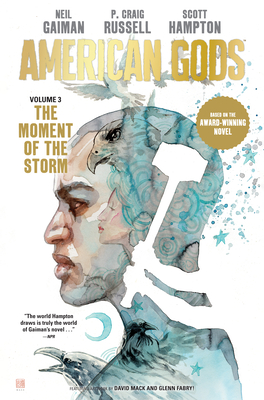
American Gods, volume 3: The Moment of the Storm (Neil Gaiman, 2020; adapted from Gaiman’s American Gods, 2001). Mr. Wednesday is dead as a doornail, so Shadow sees no reason to stick around for this war between old and new gods. It’s not so easy however. Shadow will fight in this war whether he wants to or not.

Rez Ball (Byron Graves, 2023). When Tre Brun tries out for varsity basketball, he has big shoes to fill: his older brother Jaxon was the best b-ball player the Red Lake Reservation ever saw until a car accident cut Jaxon’s life and his basketball career short. He makes it, but the struggle doesn’t stop there. Can Jaxon take the team to championship, or will his problems off the court ruin his game on the court?

The Talk (Selina Alko, Tracey Baptiste, Derrick Barnes, Natacha Bustos, Cozbi A. Cabrera, Raúl Colón, Adam Gidwitz, Nikki Grimes, Rudy Gutierrez, April Harrison, Wade Hudson, Gordon C. James, Minh Lê, E.B. Lewis, Grace Lin, Torrey Maldonado, Meg Medina, Christopher Myers, Daniel Nayeri, Zeke Peña, Peter H. Reynolds, Erin K. Robinson, Traci Sorell, Shadra Strickland, Don Tate, MaryBeth Timothy, Duncan Tonatiuh, Renée Watson, Valerie Wilson Wesley, and Sharon Dennis Wyeth, co-edited by Cheryl Willis Hudson and Wade Hudson, 2020). Thirty different authors tell stories of different “Talks” they’ve had to have with their kids.

Sleeping Beauties (Stephen King & Owen King, 2017). A pandemic has the world in a chokehold: any woman who falls asleep is wrapped up in a cocoon, and anyone who tries to wake them up or break them out probably won’t survive the attempt. The men of Dooling, West Virginia, have a possible solution: Eve Black, a woman(?) who can sleep and wake back up minus webbing. One question, though: what’s Eve’s endgame?

Who Stole My Church?: What to Do When the Church You Love Tries to Enter the Twenty-First Century (Gordon MacDonald, 2008). A church that is everywhere but nowhere threatens to split along generational lines. A fictionalized version of Gordon MacDonald, in the name of not having the church split down the middle, gathers an inner core of the congregation to talk through what’s eating the congregation. The results are surprising.

Make Your Bed: Little Things That Can Change Your Life…And Maybe the World (Admiral William H. McRaven [Ret.], 2017). Retired Navy admiral William H. McRaven shares ten life principles he learned during a long career in the Navy.

Motown and Didi (Walter Dean Myers, 1984). Motown lives in an abandoned building and improvs a living via odd jobs; Didi wants to go to college and get far away from Harlem, where her mother is ill and drugs are eating her brother alive. They’re the last two people you’d expect to fall for each other. Nothing’s impossible.

The Sea of Monsters (Rick Riordan, 2006; Percy Jackson and the Olympians #2). When Percy returns to Camp Half-Blood for the summer, things have gone pear-shaped: the camp’s protection magic has been compromised, and it’s a matter of weeks until the one safe spot for half-bloods becomes a monster vending machine. There’s an artifact that can heal the tree, but it’s in one of the most dangerous places in the mythical world: the Sea of Monsters, coincidentally the last place Percy’s BFF Grover last reported from. To save the camp and Grover, Percy has no choice but to sail the seas.

Giant Days: Not on the Test Edition Volume 1–Fall Semester (John Allison, 2017). The misadventures of a college friend group: Esther, a goth drama queen; Daisy, a homeschooled wallflower eager to spread her wings; and Susan, a chain smoker with a chip on her shoulder against her hometown. University makes for strange friendships.

Elf Dog and Owl Head (M.T. Anderson, 2023). Clay O’Brien has bad cabin fever, but with quarantine afoot, the only time he gets out of the house is exploring the nearby woods. In the woods one afternoon, Clay finds Elfinor, a magical dog from an underground kingdom. Misadventures ensue.

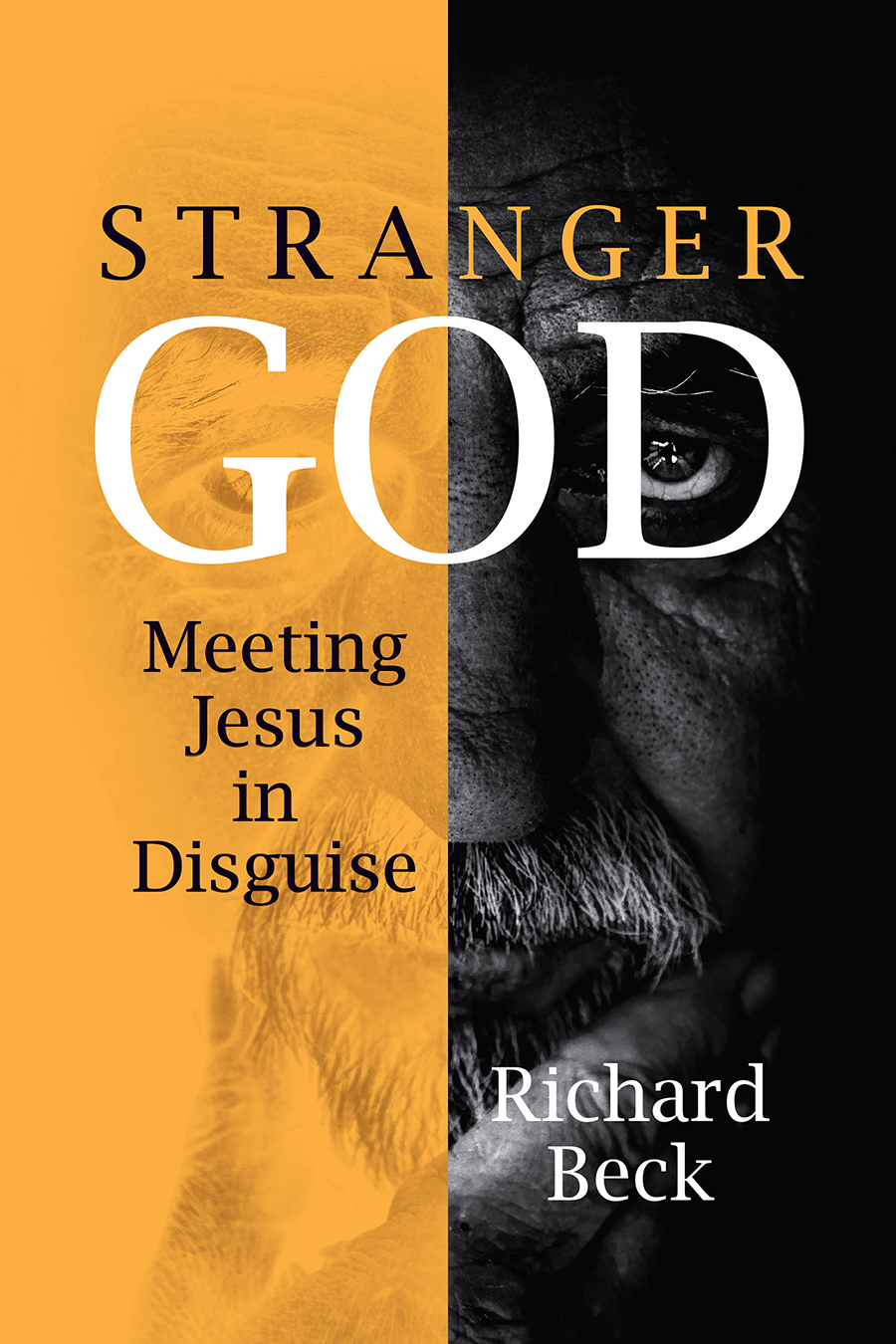
Stranger God: Meeting Jesus in Disguise (Richard Beck, 2017). Richard Beck inadvertently reinvigorated his flagging faith when he agreed to lead a Bible study in a men’s prison. From that experience, he muses on how God often shows Himself through strangers.

The Watsons Go to Birmingham–1963 (Christopher Paul Curtis, 1995). Kenny Watson’s older brother Byron has done one too many delinquent acts, so their parents decide to take a trip down to Alabama to see if their grandmother can set Byron straight. Unbeknownst to anyone, they’re driving down into history: Grandma lives in Birmingham, and the date is September 16, 1963…

Michael Vey: The Traitor (Richard Paul Evans, 2023; Michael Vey #9). The Electroclan arrives in South America to rescue Jack, Abigail and Tara. Once they find the Chasqui, they make the shocking discovery that they’ve brainwashed Jack into their ranks. The Electroclan has weathered some tough battles, but are they ready to fight an old friend?

Sharp Objects (Gillian Flynn, 2006). Chicago reporter Camille Preaker returns to her hometown of Wind Gap, Missouri, to cover the story of two young girls’ murders. Returning home drops Camille back into the grip of her hypochondriac control freak of a mother, introduces her to her troubled half-sister Amma, and agitates the issues she worked through with a psych ward stay. HBO adapted Sharp Objects into a Golden Globe-winning miniseries starring Amy Adams, Patricia Clarkson and Eliza Scanlen.

The Last Cuentista (Donna Barba Higuera, 2021). In 2061, Petra Peña and her family are four of the lucky few chosen to leave Earth before its inevitable destruction by a comet and restart the human race after a few centuries. 400 years later, Petra wakes up into a dystopian nightmare: in her time asleep, a Collective has taken charge and wiped away everyone’s memories of Earth…except Petra’s. Won the Newbery Medal in 2022.

Barraccoon: The Story of the Last “Black Cargo” (Zora Neale Hurston, 2018). A decade before writing her magnum opus Their Eyes Were Watching God, Zora Neale Hurston traveled to rural Alabama to interview Oluale Kossola/Cudjo Lewis, the last living African brought to America on a slave ship. Kossola’s/Lewis’ perspective was unique, seeing how he was an adult with a full life and family in modern-day Benin prior to his abduction. Even though Hurston conducted the interviews in 1927, Barraccoon didn’t get published until 2018 because…racism, probably.

The Outsider (Stephen King, 2018). An 11-year-old boy has been brutally murdered, and all the evidence, including multiple eyewitness statements and DNA, points to his former baseball coach, until incontrovertible evidence proves the coach was hundreds of miles away at the time of the murder. The killer couldn’t have been in two places…or could he? Made into an HBO miniseries starring Ben Mendelsohn, Cynthia Erivo and Jason Bateman.

Fallen Angels (Walter Dean Myers, 1983). Richie Perry enlisted in Vietnam for lack of better options. He had no clue what he was getting into.

Speak (Tunde Oyeneyin, 2022). The autobiography of makeup artist, Peloton instructor and public speaker Tunde Oyeneyin and how she became…a makeup artist, Peloton instructor and public speaker.

The Titan’s Curse (Rick Riordan, 2007; Percy Jackson and the Olympians #3). A mission to bring two powerful demigods to Camp Half-Blood goes horribly wrong, resulting in Annabeth and the goddess Artemis getting captured by Kronos’ forces. Percy wants to mount a rescue mission, but there’s a complication before he can leave. The Oracle predicts that five will leave to rescue Annabeth and Artemis…but only three will return to Camp Half-Blood alive.

Punching the Air (Ibi Zoboi and Dr. Yusef Salaam of the Exonerated Five, 2020). Amal Shahid is 16 years old and in prison for a crime he didn’t commit. Everyone on Amal’s side is now on the outside, and the only thing he has keeping him alive is his art. Will it be enough?

Giant Days, Not on the Test Edition, volume 2–Winter Semester (John Allison, 2018). The continued misadventures of Esther, Daisy, Susan, McGraw and Ed Gemmell.

Symphony for the City of the Dead (M.T. Anderson, 2015). From September of 1941 through the winter of 1944, Nazi forces sieged Leningrad with the hope of taking over Russia completely. Amongst Nazi forces, secret police, and Leningrad citizens turning to cannibalism out of desperation, acclaimed composer Dmitri Shostakovich finished his long-gestating Leningrad Symphony and had it smuggled out of Russia and into the West. He’d change the course of WWII by doing so.

Strong and Weak: Embracing a Life of Love, Risk and True Flourishing (Andy Crouch, 2016). The best leaders–heck, the best people–are people who can be strong and weak, people who are unafraid of vulnerability. Andy Crouch lays out a way to walk this path.

Bad Blood: A Crime Novel (Arne Dahl, 1998; translated into English from its original Swedish in 2014; Intercrime #2). A Swedish literary critic is found tortured to death in Newark International Airport, and worse yet, the way he died matches the M.O. of a serial killer who supposedly died years ago. There’s an American serial killer in Sweden, and the police need to move before he can pick up where he left off. Yeah, this book was buns.

American Assassin (Vince Flynn, 2010; Mitch Rapp #1). Mitch Rapp had it all: an Ivy League athlete months away from marrying his high school sweetheart. Then his fiancé died in a terrorist attack, and Rapp’s being became all about making the world of terrorists regret it. Made into a movie starring Dylan O’Brien as Mitch Rapp, Michael Keaton and Taylor Kitsch.

Waking Up White: And Finding Myself in the Story of Race (Debby Irving, 2014). The autobiography of Debbie Irving, an antiracist activist, and her journey of coming to terms with her white privilege.

Flight or Fright (Ambrose Bierce, Tom Bissell, Ray Bradbury, Roald Dahl, James Dickey, Sir Arthur Conan Doyle, Cody Goodfellow, Joe Hill, Stephen King, E. Michael Lewis, Richard Matheson, David J. Schow, Dan Simmons, Peter Tremayne, E.C. Tubb, John Varley, and Bev Vincent; edited by Stephen King and Bev Vincent, 2018). Flying is scary, isn’t it? Here are some short stories about how scary flying can really be.

Scorpions (Walter Dean Myers, 1988). Jamal Hicks’ older brother Randy led the Scorpions street gang when he was on the outside. Now that he’s behind bars, and that a bully won’t leave him alone at school, Jamal decides to follow in his brother’s footsteps.

The Art of Gathering (Priya Parker, 2018). How to gather smarter. …do you need a more thorough explanation?

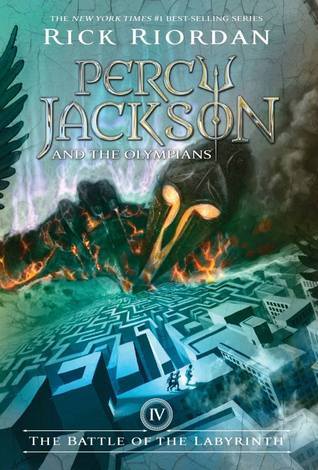
The Battle of the Labyrinth (Rick Riordan, 2008; Percy Jackson and the Olympians #4). Camp Half-Blood is in more danger than it’s ever been; Daedalus’ Labyrinth has opened an entrance inside of the campgrounds, making a way for Kronos’ forces to circumvent the camp’s defenses. The only way to keep Labyrinth entrances out of Camp Half-Blood is to find the maze’s creator Daedalus, who legend says disappeared into the Labyrinth millennia ago. With no other choice, Percy, Annabeth, Grover and Tyson delve into the Labyrinth to face all the dangers within.

Orbiting Jupiter (Gary D. Schmidt, 2015). When Jack Hurd’s parents become foster parents to Joseph Brook, Jack only knows three things: Joseph’s fresh out of prison, he went there for assaulting a teacher, and he’s a 14-year-old with an infant daughter. But as Joseph becomes a member of the Hurd family, Jack finds himself looped into Joseph’s push to be reunited with Jupiter.

A Sitting in St. James (Rita Williams-Garcia, 2021). Madame Sylvie Guilbert of Le Petit Cottage’s decision to have a portrait painted is met with apathy from her family and slaves, but it kicks off a series of events that leads to the plantation’s downfall.

Giant Days: Not on the Test Edition–Spring Semester (John Allison, 2018). One more round of misadventures with Esther, Daisy, Susan, McGraw and Ed Gemmell.

Everyday Apocalypse (David Dark, 2002). When people hear the word ‘apocalypse’, they think of zombies, nuclear war, or climate change making the Earth into a giant frying pan. But in Biblical contexts, ‘apocalypse’ meant change and revelation. Taking the Biblical definition, David Dark examines examples of apocalypse in pop culture.

Divided We Fall: America’s Secession Threat and How We Restore Our Nation (David French, 2020). Different political factions in California and Texas have threatened to secede from the United States. David French lays out why this is a really bad idea, and how to walk back from the political polarization that motivates secession talk.

Switch: How to Change Things When Change is Hard (Chip and Dan Heath, 2010). Change is easy to kick off, but difficult to maintain. How do you make change stick? Chip and Dan Heath have a few ideas.

Lost in Thought: The Hidden Pleasures of an Intellectual Life (Zena Hitz, 2020). These days, everything is judged by how useful it is. Zena Hitz, an Ivy League academic, walked away from a cushy job to rediscover the joy of “useless” learning, and she encourages you to do the same.

The Song of Achilles (Madeline Miller, 2011). Achilles is the son of a famed king and a sea goddess, a natural athlete and warrior; Patroclus is the awkward prince of a shrinking kingdom, exiled to escape consequences for murder. They’re the last people you’d expect to make an unbreakable bond, much less become lovers. But their bond is strong…so strong that it’ll spell their doom.

Force and Freedom: Black Abolitionists and the Politics of Violence (Kellie Carter Jackson, 2019). The history of how the abolitionist movement began on a foundation of nonviolence and steadily moved into accepting violence for a higher cause. I didn’t find it terribly interesting, but read it for yourself and come to your own conclusions.

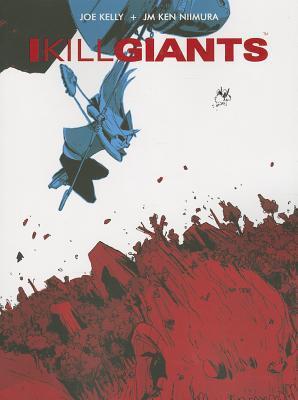
I Kill Giants (Joe Kelly, 2009). Barbara Thorson kills giants, and she’ll tell anyone who listens. Everyone thinks she’s crazy and uses her “giant-killing” to escape her hectic home life…but is she? Made into a movie in 2017 starring Madison Wolfe and Zoe Saldana.

Elevation (Stephen King, 2018). Scott Carey is losing weight, but his outward appearance remains unchanged, and wearing heavy clothes or loading himself down with items don’t change the dropping number on the scale. But strange events bring out strange things in people, and in Scott’s case, his affliction drives him to befriend the lesbian couple the rest of the town has shunned. Their friendship will last the rest of Scott’s life.

Picking Up the Pieces: Leadership After Empire (Elan Babchuck and Kathleen McShane, 2024). The pyramid style of leadership–a few at the top, many at the bottom–is everywhere, and that’s not a good thing. Rabbi Elan Babchuck and Methodist minister Kathleen McShane look to the ultimate example of a leader who broke away from the pyramid style of leadership: Moses.

Torch (Lyn Miller-Lachmann, 2022). In 1969, Pavol Bartoš publicly burns himself to death in protest of the Soviet Union’s occupation of Czechoslovakia. His death puts scrutiny on his closest friends Štěpán and Tomáš and his girlfriend Lída. Will Pavol’s death be a torch that lights their way to a brighter future, or will it burn their lives to cinders?

The Last Olympian (Rick Riordan, 2009; Percy Jackson and the Olympians #5). For four years, Percy Jackson has known that when he turns 16, he’s destined to either save or destroy Olympus. Now, with his 16th birthday days away, Kronos Lord of Time makes his move to tear down Olympus. Can Percy save Olympus from Kronos without destroying it himself?

Option B: Facing Adversity, Building Resilience and Finding Joy (Sheryl Sandberg and Adam Grant, 2017). In 2015, Facebook COO Sheryl Sandberg’s husband David died suddenly of a massive heart attack. With the help of her friend, famed psychologist Adam Grant, Sandberg documented her and her children’s process of grieving their sudden loss and how they built resilience through their tragedy.

So Tall Within: Sojourner Truth’s Journey to Freedom (Gary D. Schmidt, 2018). The story of Sojourner Truth, from her beginning as a slave to her life of activism and traveling across America to preach about the evils of slavery.

Homecoming (Cynthia Voigt, 1981; Tillerman Cycle #1). Liza Tillerman drives her children–eldest Dicey, middle child James, and littles Maybeth and Sammy–to a local mall and leaves. When nighttime comes and she doesn’t return, the kids realize they’ve been abandoned. With no other choices, they gather what supplies they have and embark on a journey to find a new home.

Martyr! (Kaveh Akbar, 2024). Cyrus Shams, a recovering addict, has looked to poetry as his higher power since he jumped on the wagon. More than anything, Cyrus wants his life and his death to mean something, so he gets a new focus on martyrs. His obsession with martyrs will take him on a journey where he has no clue what waits for him at the end.

Odd and the Frost Giants (Neil Gaiman, 2008). Odd, the pariah of his Scandinavian village, rescues a bear from a trap and realizes the bear and its eagle and fox companions are no ordinary wild animals: they’re Odin, Thor and Loki in disguise, exiled from Asgard by an invading Frost Giant. And that’s how Odd ends up on a journey to restore three gods to their former glory.

Liberal Arts and the Christian Life (Henry Allen, John H. Augustine, Edith Blumhofer, Dorothy F. Chappell, Kenneth R. Chase, Sharon Coolidge, Jeffry C. Davis, Jeffrey P. Greenman, Stephen B. Ivester, Alan Jacobs, Marjorie Lamp Mead, Mark Lewis, Duane Litfin, Roger Lundin, Wayne Martindale, Philip G. Ryken, Read Mercer Schuchardt, Jill Pelâez Baumgaertner, Lisa Richmond, Tamara Townsend, E. John Walford, Peter Walters, Michael Wilder, James Wilhoit, and Jay Wood, edited by Jeffry C. Davis and Phillip G. Ryken, 2012). Musings on how Christian liberal arts are still relevant in this day and age.

Silence and Beauty (Makoto Fujimura, 2016). Japanese-American artist Makoto Fujimura reflects on the legacy of Shusaku Endo’s Silence and how its themes pertain to Japan’s history and its religious landscape.

Die, volume 1: Fantasy Heartbreaker (Kieron Gillen, 2019). In 1991, six friends disappear while trying out a new role-playing game and reappear two years later with one of them missing and one of them missing an arm. 25 years later, a strange object arriving in the mail reunites the five. Their missing friend is alive in the world they disappeared into, and they have to save him before it’s too late.

Incidents in the Life of a Slave Girl (Harriet Ann Jacobs, written under the pseudonym Linda Brent, 1861). The autobiography of Harriet Ann Jacobs, who hid in a crawlspace for 7 years to escape her sexually obsessed master, among other drastic measures she took to obtain her freedom.

The Institute (Stephen King, 2019). Luke Ellis, a child prodigy with weak telekinetic powers, is kidnapped and taken to a black site simply known as the Institute. Here, children like Luke are experimented on to strengthen their telepathic and telekinetic powers and then used for nefarious purposes until there’s nothing left. If Luke doesn’t want himself and his new friends to end up as shells of their former selves, Luke needs to find a way to escape the seemingly inescapable Institute.

Gone Wolf (Amber McBride, 2023). In 2111, Inmate Eleven has spent her entire life in a tiny cell with only her pet wolf for company. In 2022, Imogene struggles with the anxiety that naturally comes from being immunocompromised in a pandemic, and her brothers, sources of emotional support, have gone away. If Inmate Eleven and Imogene want their lives to change, they’ll need to go wolf.

The Chalice of the Gods (Rick Riordan, 2023; Percy Jackson and the Olympians #6). Percy Jackson wants to go off to New Rome University with Annabeth, but for that to happen, he needs three recommendation letters from three different gods. Isn’t it lucky that Zeus’ cupbearer Ganymede has had his chalice stolen?

Congratulations, by the Way: Some Thoughts on Kindness (George Saunders, 2013). The book version of George Saunders’ commencement speech to Syracuse University’s class of 2013. Pretty good.

Star Wars: From a Certain Point of View (Ben Acker, Renee Ahdieh, Tom Angleberger, Ben Blacker, Jeffrey Brown, Pierce Brown, Meg Cabot, Rae Carson, Adam Christopher, Zoraida Cordova, Delilah S. Dawson, Kelly Sue DeConnick, Paul Dini, Ian Doescher, Ashley Eckstein, Matt Fraction, Alexander Freed, Jason Fry, Kieron Gillen, Christie Golden, Claudia Gray, Pablo Hidalgo, E.K. Johnston, Paul S. Kemp, Mur Lafferty, Daniel M. Lavery, Ken Liu, Griffin McElroy, John Jackson Miller, Nnedi Okorafor, Daniel Jose Older, Beth Revis, Madeleine Roux, Greg Rucka, Gary D. Schmidt, Cavan Scott, Charles Soule, Sabaa Tahir, Elizabeth Wein, Glen Weldon, Chuck Wendig, Wil Wheaton, and Gary Whitta, 2017; Star Wars: From a Certain Point of View #1). 40 stories, all set in the time frame of Rogue One and A New Hope, written to celebrate the 40th anniversary of A New Hope.

Ink Blood Sister Scribe (Emma Törzs, 2023). Half-sisters Joanna and Esther Kalotay are both up to their elbows in magic: Joanna has lived alone in their childhood home with its magical library since a rogue book claimed their father’s lives, and Esther has been globetrotting to avoid nefarious forces. But when those nefarious forces find her when she’s hidden away in Antarctica, the two sisters must reunite after a decade apart if they want to survive. Despite releasing only last year, already has a TV series adaptation greenlit.

Dicey’s Song (Cynthia Voigt, 1982; Tillerman Cycle #2). The journey is done: Dicey Tillerman and her siblings have a home with their grandmother. Now what?

Evil and the Justice of God (N.T. Wright, 2006). Back-to-back atrocities–Columbine, 9/11, the Iraq War, the 7/7 bombings, Hurricane Katrina–shattered many people’s false sense of security and slammed a question down in their laps: evil is real; what do we do about it? N.T. Wright attempts to answer that question.

Soil and Sacrament: A Spiritual Memoir of Food and Faith (Fred Bahnson, 2013). Fred Bahnson followed a divine calling to start an agrarian ministry, but he could feel himself getting lost in his work, working the land at the expense of his wife, his kids and his God. In the name of realignment, he traveled to four other agrarian faith-based communities in a journey that turned him back to God and touched on all kinds of issues.

Burn (Ted Dekker and Erin Healy, 2009). Janeal Mikkado wants out of the Romani kumpania she’s grown up in, so when a man comes to her saying he can give her a new life as long as she helps him get money her father owes him back, she agrees. The man, internationally wanted drug lord Salazar Sanso, double-crosses Janeal, kills her father, and burns everything Janeal knows to the ground. Janeal goes into hiding under a new identity, but there’s no hiding from your past–especially when something else emerged from the ashes of the kumpania.

A Lesson Before Dying (Ernest J. Gaines, 1993). Grant Wiggins, a teacher in a Cajun community who desperately wants out of his current situation, is enlisted to be a friend to Jefferson, godson of a family friend who’s on death row for being an inadvertent accomplice to a fatal liquor store robbery. Grant may be the educator, but he and Jefferson will both learn something before Jefferson’s appointment with Ol’ Sparky. The book won the National Book Critics Circle Award for Fiction in 1993 and HBO adapted it into an Emmy-winning miniseries in 1999, starring Don Cheadle as Grant Wiggins and Mekhi Phifer as Jefferson.

Die, volume 2: Split the Party (Kieron Gillen, 2020). For the six members of the party to return home, all six have to want to leave, and Sol, who has gained godlike power in his time trapped in the world of Die, doesn’t want to. With that mountain-sized obstruction in his path, the group has only one other option: survive in this world they fought tooth and nail to escape.

The Little Fishes (Erik Christian Haugaard, 1967). The story of three street urchins–Guido, Anna and Mario–struggling to survive WWII-era Italy. Won the first ever Boston Globe-Horn Book Award for Fiction.

Sun of Blood and Ruin (Mariely Lares, 2024). A mestizo vigilante tries to topple Spanish colonization of Mexico. This book was not good.

Giving Up Whiteness: One Man’s Journey (Jeff James, 2020). After the Emanuel AME church shooting, Jeff James texted an African-American friend asking what he could do, and she challenged him to give up whiteness. He said, “Bet,” and in the interest of not pulling a Rachel Dolezal, began an intellectual and spiritual journey in the name of shirking his whiteness. This sounds very ‘white liberal right after Obama’s election’ from the premise, but trust me it’s not.

If It Bleeds (Stephen King, 2020). Four brand-new novellas, one of them a continuation of Holly Gibney’s story after the events of The Outsider. Netflix adapted “Mr. Harrigan’s Phone” into a movie of the same name starring Jaeden Martell and Donald Sutherland, may he rest in peace. This year, Mike Flanagan directed an adaptation of “The Life of Chuck,” starring Tom Hiddleston in the title role.

Persepolis: The Story of a Childhood (Marjane Satrapi, 2003; Persepolis #1). Marjane Satrapi’s memoir of growing up in Iran before, during and after the Islamic Revolution, of going from a cronyist corrupt government to a fanatically fundamentalist corrupt government, and ultimately fleeing to Europe.

Totally Middle School: Tales of Friends, Family and Fitting In (Karen Cushman, Anna Dobbin, Mary Downing Hahn, Margarita Engle, Hena Khan, Lois Lowry, Gregory Maguire, Linda Sue Park, Jordan Paterson, Katherine Paterson, Gary D. Schmidt, Joyce Sidman, and David Wiesner, 2018). Eleven stories from acclaimed and beloved authors (and a couple of middle school-aged helpers) about that period of life a lot of us want to forget: middle school. I’d began working in a middle school the week before reading this, so it felt incredibly timely.

I Will Teach You to Be Rich: No Guilt. No Excuses. No BS. Just a 6-Week Program That Works (Ramit Sethi, 2009; 2nd edition released 2019). How to get your money in order. I gave it a reread to make sure I didn’t miss anything.

A Solitary Blue (Cynthia Voigt, 1983; Tillerman Cycle #3). Jeff Greene feels pulled between his uptight father the Professor and his freewheeling mother Melody, who left him and returned to South Carolina when he was 7. Then he befriends a certain family…

Warrior Girl Unearthed (Angeline Boulley, 2023; Firekeeper’s Daughter #2). Perry Firekeeper-Birch takes (is forced into, more like) a paid internship to pay for her auntie’s wrecked car, but the work compels her. She discovers there’s an active market for indigenous remains, and one of the biggest peddlers lives a stone’s throw away. When the tribe’s polite requests to give back their ancestors’ bones doesn’t yield, Perry decides on the next best solution: stealing them back.

The Ishbane Conspiracy (Randy, Karina and Angela Alcorn, 2001). A preachy dated clunky culture war-y attempt to rewrite The Screwtape Letters for the MTV generation. It didn’t work. Read The Screwtape Letters instead.

Making Peace with the Land (Fred Bahnson and Norman Wirzba, 2012). Two Christian agrarians ponder how Christians can better care for God’s world as humanity begins to reap the consequences of trampling all over the environment.

The Ruthless Elimination of Hurry: How to Stay Emotionally Healthy and Spiritually Alive in the Chaos of the Modern World (John Mark Comer, 2019). After years of church growth also led to years of burnout, John Mark Comer walked away from leading a congregation and began a new spiritual journey, one where God called him (and us) away from the hurrying, million-miles-an-hour always-multitasking world of today and to the slower path Jesus took.

Showdown (Ted Dekker, 2006; Paradise #1). A black-clad man strides into the tiny town of Paradise, Colorado, and introduces himself as traveling pastor Marsuvees Black. Rather than bring people closer to God, Black’s miracles and knowledge of the Word brings out the worst in the people of Paradise. It’s up to Johnny Drake, a young boy unmoved by Black’s enthrall, and a mysterious faction hidden in the mountains of Colorado to break Black’s spell on Paradise before it turns into Hell.

Obsessed (Ted Dekker, 2005). Stephen Friedman, a Russian Jewish immigrant to the United States, has his runaway success as a realtor interrupted by the news that Rachel Spritzer, a recently deceased Jewish socialite, was his long-lost mother and that she left him an inheritance. The problem is the inheritance is hidden in Spritzer’s house, which has a new owner: Roth Braun, a German serial killer who also wants Stephen’s inheritance. Two obsessed men: who will find the treasure first?

One Hundred Years of Solitude (Gabriel Garcí­a Márquez, 1967). The century-long story of the rise and fall of the village of Macondo and the founding family the Buendías. It’s one of, if not the, best known magical realism novels. Masterfully written, really, really hard to follow.

Die, volume 3: The Great Game (Kieron Gillen, 2020). They’re still trapped in the game. The game isn’t what it seems.

The Ayeee to Z Adulting Guide: How to Navigate Adulthood Like a Boss! (E.Z. Grace, 2024). How to not fall into a sensory overload coma once you turn 18. Very obviously meant for high school seniors and pre-20-year-olds. BUT, E.Z. Grace sent me an ARC, and some of the advice is good no matter what age you are.

The Iliad: A Graphic Novel (Gareth Hinds, 2019, adapting Homer’s The Iliad, exact publication date unknown). The tale of the Trojan War, and the battle and downfall of two heroes, Hector of the Trojans and Achilles of the Myrmidons.

After Whiteness (Willie James Jennings, 2020). A rumination on racism in the upper academies and especially in theological education from the perspective of an African-American who’s risen through the ranks.

Later (Stephen King, 2021). Jamie Conklin can see dead people, which makes him super-helpful to his mother’s cop girlfriend. With Jamie’s power, she helps locate and defuse the last bomb of Thumper, a serial bomber who killed himself to avoid capture. But now Jamie has a problem: most ghosts fade off after a few days, but Thumper’s ghost isn’t…

A Wizard of Earthsea (Ursula K. LeGuin, 1968; Earthsea Cycle #1). Ged is the most talented wizard the land of Earthsea has ever seen. But when he was young and overconfident, he released something evil into the world, something that haunts him wherever he goes. Ged has magical skill by the pound, but if he wants to achieve greatness, he must banish this evil back to the hellscape it came from.

The Power (Naomi Alderman, 2017). The global balance of power rapidly flips as women worldwide develop skeins, an organ that lets them generate electricity from their bodies. We the audience learn all the reasons a matriarchal world wouldn’t necessarily be a better one. Prime Video adapted The Power into a miniseries starring Toni Collette, Auli’i Cravalho and Toheeb Jimoh.

Pay Attention, Carter Jones (Gary D. Schmidt, 2019). On the first day of sixth grade, Carter Jones answers a knock at the front door and finds the unexpected: a British butler, entrusted to the Jones family by their recently-deceased grandfather. Mr. Bowles-Fitzpatrick brings order to the Jones household, order that the family hasn’t had since their father decided not to return from his stationing overseas in Germany. With a new role model, Carter can finally confront the secrets that have been haunting him.

Macbeth: A Parallel Text (2004; a modern translation of Macbeth, 1623). The best Shakespeare tragedy, with a modern translation side by side.

What I Know Now: Letters to My Younger Self (Madeleine Albright, Maya Angelou, Rachel Ashwell, Barbara Boxer, Susie Buffett, Roz Chast, Breena Clarke, Ann Curry, Carolyn Deaver, Olympia Dukakis, Eileen Fisher, Macy Gray, Noor Al-Hussein, Jane Kaczmarek, Kitty Kelley, Gerry Laybourne, Rebecca Lobo, Camryn Manheim, Mary Matalin, Heather Mills McCartney, Trish McEvoy, Shannon Miller, Shelley Morrison, Marilyn Carlson Nelson, Ingrid Newkirk, Jane Bryant Quinn, Phylicia Rashad, Ann Reinking, Cokie Roberts, Nora Roberts, Joyce Roché, Lisa Scottoline, Beverly Sills, Liz Smith, Picabo Street, Joyce Tenneson, Wendy Walker, Vanna White, Naomi Wolf, Lee Ann Womack, and Trisha Yearwood, collected by Ellyn Spragins, 2006). Ellyn Spragins asked 40 famous women to write letters to their younger self. Then she made it into a book.

Building Blocks (Cynthia Voigt, 1984). Brann Connell’s poor relationship with his father changes forever when he falls asleep among his father’s childhood blocks and wakes up to meet his father…at ten years old.

The Serpent King (Jeff Zentner, 2016). In my favorite book of all time, three friends–disgraced pastor’s son Dill, up-and-coming fashion influencer Lydia, and fantasy nerd Travis–ride out their senior year as they prepare for their inevitable separation. They have no idea of the challenges they’ll have to face.

To Be Made Well: An Invitation to Wholeness, Healing, and Hope (Amy Julia Becker, 2022). From her own experiences with an eating disorder and stress-induced illnesses, as well as the story of Jesus healing the woman with the issue of blood, Amy Julia Becker ruminates on community in the kingdom of God, and the healing role it can play.

Fahrenheit 451 (Ray Bradbury, 1953). Ray Bradbury’s dystopian classic depicts a world where anti-intellectualism has taken over, and the role of firemen has changed from extinguishing fires to igniting them to burn books. Fireman Guy Montag has his fervor for burning books shaken by his neighbor Clarisse, who awakens his long-gestating curiosity, and a woman who burns herself alive rather than have the firemen destroy her books. Has received two film adaptations, the more recent one by HBO, starring Michael B. Jordan as Guy Montag, Michael Shannon and Sofia Boutella.

Saint (Ted Dekker, 2006; The Paradise Trilogy #2). Carl Strople is one of the deadliest people on the planet, his mind systematically scrubbed clean of any memory of his earlier life and his body carefully crafted into a human weapon. But his latest hit pokes a hole in his mind wipe and puts him on the run, trying to escape his employer and find out who Carl “Saint” Strople really is.

So that was all my reads of 2024! If you want longer form reviews, follow me on Instagram @peachykeenebooks. Happy 2025 and happy reading!

The Plagiarism Plague

If you’re not currently in school or academics, then it’s probably been a long time since you’ve thought about plagiarism. However, in the last couple of months, plagiarism suddenly exploded as a topic.

On the Internet, the ball got rolling in early December, when YouTuber hbomberguy dropped a nearly four-hour video titled “Plagiarism and YouTube.” While hbomberguy discussed all kinds of plagiarism on YouTube, two people really bore the brunt of his ire. hbomberguy accused Internet Historian, a documentary YouTuber, of plagiarizing large chunks of one of his highest-profile videos, “Man in Cave,” an animated documentary about the death of cave diver Floyd Collins. However, hbomberguy devoted nearly half of the video to James Somerton, a self-styled LGBTQ+ historian who hbomberguy revealed had plagiarized most of his videos’ content from certified historians and other LGBTQ+ YouTubers. Hours after hbomberguy dropped his video, music YouTuber Todd in the Shadows poured gasoline on James Somerton’s funeral pyre with a 2-hour video bluntly titled “I Fact-Checked the Worst Video Essayist on YouTube,” where Todd demonstrated much of what Somerton hadn’t plagiarized he made up and/or used as a cover for misogyny and transphobia.

But plagiarism isn’t a YouTube-exclusive problem. Offline, the plagiarism ball got rolling on the campus of Harvard University. Claudine Gay, the first African-American president of Harvard, resigned from the position in January following accusations of plagiarism in her dissertation and in her academic work. The accusations were transparently politically motivated: the accusations came from Christopher Rufo, a high-profile conservative activist whose antics have gotten a mention on this blog before, and Aaron Sibarium, a journalist for the openly right-wing Washington Free Beacon, and these accusations conveniently came out as Gay was in Congressional hearings discussing antisemitism on Harvard’s campus. In a delicious case of irony, Neri Oxman, former MIT professor and wife of Bill Ackman, one of Claudine Gay’s loudest accusers, dealt with her own plagiarism accusations from Business Insider. A BI article presented evidence that Oxman’s academic writings were full of plagiarism and that she had plagiarized from Wikipedia in her dissertation.

And this isn’t an exclusively American problem. (As if a video from a British YouTuber focusing on a Kiwi and Canadian’s plagiarism wasn’t enough of an indicator.) Sandra Borch, who’d been acting as Norway’s minister of higher education since 2023, resigned from the role in January due to accusations of her plagiarizing her master’s degree dissertation. Her alma mater, the University of Tromso, announced in March that Borch’s master’s degree would be annulled due to the plagiarism.

There are more examples, especially since plagiarism accusations became a political tool, but those are the big examples. So, with all these examples laid out, let’s ask ourselves the million dollar question: why is plagiarism such a problem?

There are a couple of answers. The first is deadline culture.

Charles Seife, a journalism professor in New York University’s Arthur L. Carter Journalism Institute, wrote an op-ed about the Claudine Gay situation. He made the case that the problem comes from an academic culture where the level of prestige an individual has is directly correlated to the amount of academic content (research papers, academic texts, etc.) you can spew out. A Guardian article discussing plagiarism accusations against British politician Rachel Reeves went for a similar angle, saying that the publishing industry with its high-pressure crunch culture inadvertently rewards authors who cut corners and plagiarize and/or don’t fact-check their sources. While YouTube and other social media sites don’t have deadlines, YouTube favors frequent uploads and long videos, hence the boom of daily vlogs in the late 2010s that made people like the Paul brothers, Casey Neistat and Emma Chamberlain YouTube superstars. James Somerton, by plagiarizing, made his videos algorithmically desirable by being able to upload 25 minute-1 hour videos way faster than if he’d done the research himself.

Second is technological advancements.

When I started writing this post, James Somerton had seemingly left the Internet. He deactivated his Patreon, Twitter and Instagram accounts, set all his videos uploaded to YouTube to private, and wiped his channel–no profile picture, no description, no external links, nothing. However, he recently returned, rebranded himself as James of Telos (Greek for “end” or “finish”) and made 17 of his videos public. I know he made more content than those videos, but that’s what available at this moment. I crunched some numbers: Somerton’s videos come to an approximate total of 14 hours of video content. Now, hbomberguy could have picked Somerton’s videos apart gumshoe-style, finding the videos and books Somerton plagiarized and comparing them side-by-side. More likely, he used technology, something like turnitin.com or some kind of AI that could sift through all that content and find lines or ideas lifted from elsewhere without proper creditation. In an Inside Higher Ed article about the so-called “plagiarism war”, Elisabeth Bik, a former Stanford scientist who now hunts for plagiarism in academic texts, says most of the worst cases of plagiarism she’s encountered happened before 2010. 2010 was the point where plagiarism-detecting websites and software really took off. In that respect, plagiarism isn’t some new problem that suddenly fell on the world of academics and social media like a ton of bricks. It’s always been a problem, but only recently did we get the technological means to show a sixty-minute video is mostly plagiarized and determine where the original writing comes from.

The third piece of the pie is the reason anybody cheats: it can take you places.

Yes, I know people say “cheaters never prosper,” and I guess this sudden exposé of plagiarism and the consequences are examples of that, but look how far the accused got before their fraud caused them problems. Claudine Gay made history by becoming the first African-American president of Harvard, this after a long academic career that included teaching at Stanford and being a dean at Harvard before becoming president. Neri Oxman enjoyed similar success, teaching at MIT and having her designs in museums worldwide. An LGBTQ Nation article about James Somerton estimates that at the time of hbomberguy releasing “Plagiarism and YouTube,” Somerton made $170,000 a year through his Patreon, plus an additional $65,000 he crowdfunded to start an LGBTQ+ movie studio and that sweet, sweet ad revenue money. Sandra Borch got to lead a branch of the Norwegian government before her plagiarism caught up to her.

So…what now?

As interesting and sometimes hilarious it is to see plagiarists get exposed, there’s not much you and me, regular Joe Schmoes, can do. Besides not plagiarize, obviously. Much like how Harvey Weinstein’s exposure as a sexual predator was the first domino in a long line of celebrities, I expect the couple of examples I’ve talked about today to be the first in a series of plagiarism scandals. The only thing I can say?

Don’t be one of them.

The Great Celebrity Downfalls of 2023

2016 was a bad year for a lot of people on all fronts. One of those ways was a lot of celebrity deaths. Prince, David Bowie, Alan Rickman, Anton Yelchin, Gene Wilder, Abe Vigoda, George Michael, Garry Shandling, Muhammad Ali and Christina Grimmie were but a handful of celebrities who died in 2016.

I’m mentioning this to draw a parallel between that year and the year we’re freshly out of. If 2016 was the year celebrities died metaphysically, 2023 was the year celebrities died reputationally.

Yeah, there were a lot of scandals and a lot of ruined reputations in 2023. To name a few:

  • Maybe the most damning scandal was so scandalous because it went beyond bad behavior into criminality. Danny Masterson of That ’70s Show and The Ranch fame received 30 years to life in prison on two counts of rape. Obviously, a possibly-permanent pause in Masterson’s career is a bad look for him, but the trial made a bunch of different people show their butts:
  • Perhaps the most ironic scandal of the year happened to Lizzo. The singer, who’s marketed herself as a body-positive, sex-positive and uplifting act, is currently the subject of a lawsuit by three of her backup dancers, where she’s been accused of sexual harassment, religious harassment, and creating a toxic work environment. The trio claims Lizzo, among other things, overworked them, forced them to attend nude dances where they had to eat fruit off the dancers’ genitalia, forced non-Christian workers to pray with her, and made derogatory comments about a dancer gaining weight. People naturally had a field day about the proudly plus-size Lizzo mocking someone else for being overweight, but I digress. The suit has yet to hit court, but it’s certainly hit Lizzo’s reputation.
  • In the summer of 2023, Hollywood came to a standstill as the Writers’ Guild of America (WGA) and the Screen Actors Guild-American Federation of Television and Radio Artists (SAG-AFTRA) went on strike. Much like the Masterson trial, the strike acted as a backdrop for several celebrities to pull up the ladder, including but not limited to: Drew Barrymore, Stephen Amell, Bill Maher, Kim Kardashian, and TikTokers Juju Green AKA @straw_hat_goofy and Collin Everett aka @collinurrmom.
  • In 2023, Britney Spears released her memoir The Woman in Me. In said memoir, she revealed that when she dated Justin Timberlake in the early 2000s, Timberlake knocked her up and then forced her to get an abortion. Less scandalous, more embarrassing, she also said that when Timberlake first met African-American singer Ginuwine, he used an affected ‘blaccent’ and Ebonics.
  • Since we’re on the topic of memoirs, Will Smith’s reputation took more hits. (Get it? Will Smith? Hits? …I think I’m clever.) Jada Pinkett Smith revealed in her memoir released this year that she and Will Smith had been separated for years prior to Will’s altercation with Chris Rock at the 2022 Oscars. Another stain on Will Smith’s rapidly tarnishing reputation.
  • In September 2023, the Jonas Brothers’ Joe Jonas and Game of Thrones actress Sophie Turner called it quits on their 4-year marriage. Celebrities getting divorced is nothing special. What is special is the number of hit pieces depicting Turner as an irresponsible mother and the subsequent backlash against said articles, which eventually turned on Jonas.
  • 2023 was a bad year for Doja Cat, mostly because of the company she kept. The singer received criticism for dating Twitch streamer Jeffrey Cyrus at the same time several women accused Cyrus of emotional abuse and manipulation. Later on, Doja caught more heat for wearing a T-shirt with a picture of Sam Hyde, a comedian with ties to the alt-right, on it.
  • Leaked texts left Jonah Hill with egg on his face. In July, his ex-girlfriend Sarah Brady shared screenshots from when she and Hill were together. In the texts, Hill tried to keep her from having friendships with other men and demanded she delete social media posts where she had a bikini on.
  • Sean “Diddy” Combs is fighting four lawsuits, one from his ex-girlfriend and fellow musician Cassie Ventura, and three from unnamed women, accusing Combs of physical and sexual abuse, sex trafficking, and producing revenge porn. Several companies cut ties with Combs’ various business ventures, and a Hulu reality series about Combs and his family got the axe before it could go into production.
  • Ariana Grande divorced her husband, real estate agent Dalton Gomez, in October. Again, celebrity divorces: nothing new. What is new is the revelation that Grande had been seeing Ethan Slater, her costar in the upcoming cinematic adaptation of the Wicked musical. Slater is married with a baby, by the way.
  • Rolling Stone published an expose where 16 staff members on The Tonight Show with Jimmy Fallon accused Fallon of creating a toxic work environment on set. Fallon issued an apology, but apology or no, he joins Ellen DeGeneres and Lizzo in the pantheon of Supposedly Nice Celebrities with Skeletons In Their Closet On Their Sets.
  • And, because every famous person seemed determined to tarnish their reputation somehow some way in 2023, over 2000 actors, directors, producers and musicians signed a letter in support of Israel during the latest bout of the Israeli-Palestinian conflict. Signers include, but aren’t limited to: Haim Saban, Gal Gadot, Michael Douglas, Jerry Seinfeld, George Lopez, Shannen Doherty, Jamie Lee Curtis, Zachary Levi, Mekhi Phifer, Amy Schumer, and Asher Angel.

Now, those are the scandals I heard about. People who follow celebrity gossip more closely than I do, people in niche communities, and people more chronically online could probably add a bunch to that list. But I’m not talking about this in an attempt to turn my blog into a gossip column. I’ve mentioned all of this to say: with so many celebrities having shown their true colors, maybe celebrity worship can finally come to an end.

Celebrities aren’t “better” than your average Joe working a 9-to-5. They’re normal people, as capable of kindness, rudeness, generosity, greed, patience, anger, selflessness and selfishness as you or me. I’m not saying 2023 should be a reason to think Hollywood is some pit of evil. After all, for every one celebrity who got caught slipping, there are a dozen who kept their noses clean.

But maybe we can take celebrities as a group off the pedestal and treat them like normal people, albeit normal people you see on TV or follow on Instagram?

Please?

Sad Boi Decade

Music is always changing.

The so-called “top genre” has shifted multiple times in my lifetime. In the 1990s and into the early 2000s, rock dominated the music scene, first with grunge bands like Nirvana and Alice in Chains, then in post-grunge bands like Limp Bizkit, Nickelback and Breaking Benjamin. In the mid-2000s and going into the 2010s, pop music and R&B would overtake rock. Hip-hop would reach a peak of popularity in the late 2010s, before pop music would reclaim the top spot in the 2020s.

But among the genre wars, among new factors like the rise of Spotify and TikTok and their subsequent influences on popular music, something else happened.

Music got sadder.

OBSERVE.

Before we continue, let me give you my definition of “sad music.” “Sad music,” in my humble opinion, is music that fits any of the following criteria: 1. Music composed in minor key. 2. Music that deals with dark or bittersweet topics (death, mental illness, infidelity, etc.) 3. Music that utilizes musical techniques associated with sad music (ex. slow tempo, quiet or low vocals, lyrics centered around loss, longing for better times, etc.)

Now, sad music has always existed. And even in the time periods people look to when they say music used to be happier, sad songs were still popular. Peter Rugman, the TikToker duetted in the above TikTok video, singles out the time period of 2007 to 2016 as a happier, more upbeat time in pop music. Scanning through the Billboard Year-End Hot 100 of those years, here’s a list of sad songs that charted in those years:

  • “Hey There Delilah” by the Plain White T’s
  • “It’s Not Over” by Daughtry
  • “What I’ve Done” by Linkin Park
  • “Face Down” by the Red Jumpsuit Apparatus
  • “Apologize” by OneRepublic
  • “You Found Me” by The Fray
  • “Second Chance” by Shinedown
  • “Love the Way You Lie” by Eminem and Rihanna
  • “Not Afraid” by Eminem
  • “If I Die Young” by The Band Perry
  • “Rolling in the Deep” by Adele
  • “Someone Like You” by Adele
  • “Just a Kiss” by Lady A
  • “Somebody That I Used to Know” by Gotye and Kimbra
  • “Set Fire to the Rain” by Adele
  • “A Thousand Years” by Christina Perri
  • “Mirrors” by Justin Timberlake
  • “Wrecking Ball” by Miley Cyrus
  • “Let Her Go” by Passenger
  • “Stay with Me” by Sam Smith
  • “Say Something” by A Great Big World and Christina Aguilera
  • “Stay the Night” by Zedd and Hayley Williams
  • “See You Again” by Wiz Khalifa and Charlie Puth
  • “Take Me to Church” by Hozier
  • “I’m Not the Only One” by Sam Smith
  • “Hello” by Adele
  • “Wildest Dreams” by Taylor Swift
  • “Girl Crush” by Little Big Town
  • “One Last Time” by Ariana Grande
  • “7 Years” by Lukas Graham
  • “Lost Boy” by Ruth B

In addition to that, multiple artists that made a downbeat sound part of their brand rose to fame and/or saw continued success between 2007-2016: megastars like Adele, Sam Smith and Hozier; bands like Shinedown, Linkin Park and Lukas Graham; and one-hit wonders like Gotye, Passenger and the Red Jumpsuit Apparatus.

All of what I’ve so far presented is anecdotal evidence, but there is hard evidence for music becoming sadder…but that hard evidence flies in the face of the assertion that the music world having a depressive episode is a recent phenomenon. Lior Shamir, a computer science professor who formerly taught at Lawrence State University and currently teaches at Kansas State University, performed an experiment in 2019. Using an algorithm, he analyzed the lyrical content of songs that reached the Billboard Hot 100 between 1951 and 2016. The algorithm measured different emotions–joy, happiness, fear, sadness, anger and disgust–in song lyrics on a scale from 0 to 1. Shamir found that in the 7-decade span the algorithm analyzed, lyrics displaying positive emotions like joy and extraversion steadily declined, while lyrics centered around negative emotions like sadness, disgust and fear steadily increased…starting in the 1950s. BBC and Inside Science both reported on Shamir’s experiment. The following images are charts the BBC article included in their article showing the decrease of joyful lyrics and increase in sad lyrics:

What does this mean? Contradicting Señor Rugman’s assertion, even in the period of 2007-2016, as well as other supposedly upbeat periods in music history like the early 1960s and most of the 1980s, music was getting steadily sadder, angrier and more cynical.

But whether the music industry’s feeling blue started 7 years ago or 7 decades ago, a question hangs over this whole observation: why is music getting sadder?

We can get our first answer by looking at when music started to get sadder. Shamir’s study looked at music from the 1950s up to the mid-2010s. To oversimplify 50 years of music, music in the 20th century’s first half was a vehicle of escapism. From the jazz of the Roaring ’20s to the bubblegum pop of the ’50s to the first few lighthearted outings of the Beatles in the early ’60s, music in the first five decades or so of the 1900s was made with the intention of nodding your head along and snapping your fingers, something to put on to forget the stresses of work and school. But in the early ’60s, everything went to hell. John F. Kennedy’s violent assassination in front of hundreds acted like a hammer, shattering the peace and idealism of post-WWII America. The civil rights movement, the Stonewall riots, and the early waves of feminism opened a lot of people’s eyes to the inequality and bigotry ubiquitous in American society. The assassination of civil rights leaders–Malcolm X, Martin Luther King, Jr., Medgar Evers, Robert Kennedy, Fred Hampton–squashed people’s hope for a more equal and progressive society. The Vietnam War, the Kent State massacre, Watergate, and suspicions that several civil rights leaders’ deaths were government-ordered (suspicions proved right in at least one case, albeit decades later) destroyed the good faith the likes of Franklin Roosevelt, Dwight Eisenhower, and John F. Kennedy in death had built for the US government. And those are only American examples. Abroad, the many dictatorships of the 20th century and the economic and societal devastation of the World Wars were (understatement of the century) real mood-killers worldwide.

All of this cynicism needed an outlet, and for a lot of people, musicians and listeners alike, that outlet was music. The protest song, an old form of music, gained new life, as folks like Bob Dylan, Phil Ochs and Johnny Cash would produce some of the genre’s greatest hits. Outlaw country, a form of progressive country highly critical of American society, took off in the late ’60s and going into the ’70s. Acts like John Lennon and Bruce Springsteen and bands like Rage Against the Machine made addressing social issues part of their brand. A whole sub-genre of rap, conscious hip-hop, speaks on societal problems. See: Kendrick Lamar and J. Cole.

The second part of the answer? A lot of “happy” music isn’t as happy as people make it out to be. Going back to the Peter Rugman video, he pins down 2007-2016 as a happier time in music. These were also the years where the US (and the world in general, but especially the States) experienced the Great Recession. Much like the late 1960s, everything went to hell in 2007 and 2008. The graduating classes of those years graduated into the worst economy possible. Single people, parents, retirees, all across the board plunged into financial instability or outright poverty even when they did everything right. And yet, at this time of worldwide depression, music got a pep in its step. There’s a name for the era of music Peter Rugman zeroes in on: “recession pop.”

Let’s return to my definition of “sad music” briefly. When most people think of a sad song, they think of something gloomy, something slow, maybe with violins or piano, maybe tackling something serious along the way, depression or divorce or death or some other personal crisis starting with “D.” Those are two parts of my three-part definition of sad music, but let’s consider the third: music that deals with dark or bittersweet topics. So-called recession pop does, but indirectly. Most sad music tackles sad things head-on, but recession pop does so through escapism. Your girlfriend left you, you’ve got a master’s degree but you’re working at Starbucks, you’re pretty sure your parents are wondering why they had you, and you’ll never own a house. Here’s the Black-Eyed Peas!

Most people, either by name or by concept, know about “lyrical dissonance,” when gloomy, depressing or otherwise not-happy lyrics are paired with cheery upbeat music. See: Sia’s “Chandelier,” a song about an alcoholic going on a binge; Justin Bieber’s “Love Yourself,” a cute little ditty where he gives his terrible ex both barrels in song form; and Michael Jackson’s “Smooth Criminal,” a song about Annie being attacked and likely murdered by her criminal ex-boyfriend. Recession pop traffics in mood dissonance, cheery-sounding music meant to distract listeners away from their real-life problems.

How do I conclude a post like this? I don’t know. Despite people’s personal feelings about this, there’s nothing inherently bad about a song being sad or a musician making a downbeat sound part of their brand. The only thing I can think to say is: I hope in the future, the world improves to the point we don’t need sad music, of the conventional type or the sneaky recession pop type, as an emotional crutch.

100+ Books, 3 Sentences: Volume 3

We’ve done this three times now. You know the deal: Books. I read ’em. Summaries. I’m writing ’em. Let’s get to it.

The Books I Read in 2023

The Da Vinci Code (Dan Brown, 2003; Robert Langdon #2). The murder of a high-profile museum curator drops Harvard symbologist Robert Langdon in the middle of a centuries-old conspiracy. Decent plot that’s about 200 pages too long. Made into a movie starring Tom Hanks, Audrey Tautou and Ian McKellen.

The Chocolate War (Robert Cormier, 1974; Chocolate War #1). Trinity High School has something hidden in its halls: the Vigils, a secret society of menaces to society. When the school’s annual chocolate sale comes up, the Vigils convince freshman Jerry Renault to not sell chocolates for ten days and get a shock when Jerry defies them and keeps not selling after he was supposed to. Considered one of the most influential YA books ever written; made into a movie starring John Glover and Doug Hutchison.

All the Light We Cannot See (Anthony Doerr, 2014). A young blind girl is inadvertently drafted into the French Resistance after the Nazis take her father; a disillusioned Wehrmacht soldier sees mysterious radio transmissions as his way out from under the Fuhrer’s boot; a Nazi jewel hunter with only months left to live takes desperate measures to kill the cancer killing him. A supposedly cursed diamond will tie these three threads together in the book that won the Pulitzer Prize in 2014. Made into a Netflix miniseries starring Mark Ruffalo and Hugh Laurie.

Tears We Cannot Stop: A Sermon to White America (Michael Eric Dyson, 2017). Reverend Michael Eric Dyson, Ph.D., preaches, not to his congregation, but to white America. I wish it didn’t have to be written, but it’s really good. Book #28 on my antiracism reading list.

Just After Sunset: Stories (Stephen King, 2008). An anthology of stories from America’s uncle that watched way too many horror movies growing up. For me, the highlight was “N.”, a previously-unpublished novella.

Nation (Terry Pratchett, 2008). A boy-man named Mau is the only survivor when a tsunami washes away his tribe. But the wave also beaches a ship, and soon its only survivor, Daphne, meets Mau. The two, separated by language and culture, will go on to found a new nation.

Mara’s Stories: Glimmers in the Darkness (Gary D. Schmidt, 2001). Under the Nazi regime, elderly Jewish woman Mara has no name, no identity, no culture, no humanity. But under the cover of darkness, Mara keeps one of the oldest Jewish traditions alive: oral stories.

The Queen of Attolia (Megan Whalen Turner, 2000; The Queen’s Thief #2). A terribly boring sequel. Not worth the effort it takes to recap.

This Is Water: Some Thoughts, Delivered on a Significant Occasion, about Living a Compassionate Life (David Foster Wallace, 2009). David Foster Wallace was a workhorse of a writer who dabbled in all kinds of genres. In 2005, for the first and last time, he’d take a shot at a commencement address to the graduating class at Kenyon College. Title: “This is Water.”

An Audience of Three: the Key of Hope Story (Tim Warner, 2019). A call from God compelled Dan and Rachel Smithers to sell everything and move to Durban, South Africa, the HIV/AIDS capital of the world. From Durban, the couple would found the organization the Key of Hope. Tim Warner was my children’s pastor; this book is great.

Dirt Work: An Education in the Woods (Christine Byl, 2013). When Christine Byl became a trail maintenance worker in a Montana national park fresh out of college, she expected it to be a job to pay the bills until she found the Big Girl Job. Two trail maintenance jobs, a marriage to a coworker, and a move to the Alaska wilderness later, and she was proven wrong. This is the story of Christine’s evolution.

Artemis Fowl (Eoin Colfer, 2001; Artemis Fowl #1). Two years ago, Irish criminal mastermind Artemis Fowl I went missing in a business enterprise gone bad. With the family fortune reaching its end, his son Artemis Fowl II puts a crazy plan in motion: kidnap a fairy and use its gold to turn the Fowls’ misfortune around. Made into a loogie-in-the-face of a movie starring Ferdia Shaw, Lara McDonell, and Judi Dench.

I am the Cheese (Robert Cormier, 1977). Adam Farmer rides his bike from Massachusetts to Vermont to visit his hospitalized father. The further he gets into his ride, however, the more holes that appear in his memory, and the more danger he finds himself in. Made into a movie starring Robert MacNaughton and Cynthia Nixon.

What Truth Sounds Like: Robert F. Kennedy, James Baldwin, and Our Unfinished Conversation About Race in America (Michael Eric Dyson, 2018). In 1963, Attorney General Robert F. Kennedy met with James Baldwin and other black intellectuals as a conciliatory gesture, and the intellectual thrashing would cause a radical shift in Kennedy’s politics. From this seminal meeting, Dyson springs into discussion about black art, celebrity, life, and so on. Book #29 on my antiracism reading list.

Under the Dome (Stephen King, 2009). An invisible, impenetrable dome cuts the small town of Chester’s Mill, Maine, off from the rest of the world. Ex-military drifter Dale “Barbie” Barbara and local newshound Julia Shumway inadvertently find themselves the leader of a resistance movement when a local politician capitalizes on the chaos to become a dictator. Adapted into a meh CBS series starring Mike Vogel, Rachelle Lefevre and Dean Norris.

Brownsville (Neil Kleid, 2006). The story of “Murder, Inc.”, the crime syndicate that invented the idea of killing for hire, told through the eyes of Jewish gangster Albert “Allie Boy” Tannenbaum. It was alright, kind of boring.

Marching for Freedom: Walk Together, Children, and Don’t Grow Weary (Elizabeth Partridge, 2009). The story of the Civil Rights Movement, told through the eyes of people in the crowd. Pretty good.

The Great Stone Face (Gary D. Schmidt, 2002). Ernest’s tiny village is overlooked by the Great Stone Face, and local legend says that whoever resembles the face in the mountainside will be the noblest man in the countryside. The years will pass, and only when Ernest is an old man will the prophecy be fulfilled. Based off a story of the same name by Nathaniel Hawthorne.

The King of Attolia (Megan Whalen Turner, 2006; The Queen’s Thief #3). The one where Gen becomes king of Attolia. Still boring, but it’s not The Queen of Attolia, so we’ll call it an improvement.

Bored and Brilliant: How Time Spent Doing Nothing Changes Everything (Manoush Zomorodi, 2017). Work and new baby-induced burnout made podcast host Manoush Zomorodi unplug. Her mental health improved so much that she made a challenge and a spin-off book out of her experiment: the Bored and Brilliant Challenge and this book.

The Life and Crimes of Hoodie Rosen (Isaac Blum, 2022). Yehuda ‘Hoodie’ Rosen is an Orthodox Jew, one of many who’s moved into the small town of Tregaron; Anna-Marie Diaz-O’Leary is the girl he falls for, the daughter of the mayor trying to keep the incoming Jewish community from putting down roots. They fall for each other as anti-Semitic crimes drive a wedge between the Jewish and Gentile communities of Tregaron. Can their young love survive the hate?

Parasomnia (Cullen Bunn, 2021; Parasomnia Issue #1). A man searching for his missing son is knocked unconscious…and wakes up in another world. This series might be great. but I only read the first issue.

Crazy Love: Overwhelmed by a Relentless God (Francis Chan, 2008). Christianity runs deeper than showing up to church on Sunday, listening to Maverick City, and not cussing. Francis Chan makes a book out of that hypothesis. A pretty good one, too.

Artemis Fowl: The Arctic Incident (Eoin Colfer, 2002; Artemis Fowl #2). A ransom video sent by the Russian mob reveals to Artemis Fowl that his father is alive. Captain Holly Short comes to the surface to arrest Artemis on suspicion of selling human weapons to underground criminals, but is inadvertently roped into the rescue mission.

Notes from the Underground (Fyodor Dostoyevsky, 1864). For over 40 years, a man has hidden away from Russian society. What caused this man’s misanthropy? Read to find out (and then watch Taxi Driver, because it’s probably the closest we’ll get to a NftU movie).

Ransom (Lois Duncan, 1966). Five teens–BMOC Bruce and his younger brother Glenn, loner Dexter, rich girl Marianne, and military brat Jesse–are kidnapped and held for ransom. …that’s it.

Long Time Coming: Reckoning with Race in America (Michael Eric Dyson, 2020). Inspired by the execution of George Floyd, Michael Eric Dyson makes a book out of writing letters to him and six other black people gone too soon: Emmett Till, Elijah McClain, Breonna Taylor, Sandra Bland, Hadiya Pendleton, and Reverend Clementa Pinckney. Book #30 on my antiracism reading list.

Full Dark, No Stars (Stephen King, 2011). Four stories, all macabre. Three of them–“1922,” “Big Driver,” and “A Good Marriage”–have all been adapted into movies. Pretty good collection.

Becoming Better Grownups: Rediscovering What Matters and Remembering How to Fly (Brad Montague, 2020). Adulthood is something to be dreaded in today’s society, hence the existence of the verb “adulting” and many people’s expectations of several decades of slog that concludes in death. Brad Montague, creator of the “Kid President” web series, pushes back against that narrative: to be a better adult, so says Montague, you must be childlike.

The Wonders of Donal O’Donnell (Gary Schmidt, 2002). Donal and Sorcha O’Donnell are still reeling from the sudden death of their son when three men show up on their farmhouse’s doorstep during a downpour. The men–Donal O’Leary, Donal O’Neary and Donal O’Sheary–will tell stories that will break open the couple’s frozen hearts.

Things Not Seen (Andrew Clements, 2002: Things #1). 15-year-old Bobby Phillips wakes up invisible one winter morning. As he’s still processing his new state, he meets Alicia, a girl blinded in a freak accident. It’s a race against time for the two of them to find what turned Bobby invisible as the authorities close in on the Phillips family.

Kindred: A Graphic Novel Adaptation (Damian Duffy and John Dennings, adapting Octavia Butler’s Kindred, 2017). With no warning, Dana, a black woman from the 1970s, is transported back into the pre-Civil War South, and rescues a young white boy. As she continues to bounce between past and present, she comes to a realization: the young man whose life she keeps saving is her own ancestor. Hailed as a cornerstone in African-American literature, science fiction, and Afrofuturism, a TV adaptation of Kindred aired for one season on FX.

The Perks of Being a Wallflower (Stephen Chbosky, 1999). Charlie starts high school grieving his best friend’s suicide. It’s pure luck that Patrick, the weird kid in his woodshop class and his cute stepsister Sam take Charlie under their wing and bring him back to life. Made into a movie starring Logan Lerman as Charlie, Emma Watson as Sam and the Reverse-Flash/Ezra Miller as Patrick.

Artemis Fowl: The Eternity Code (Eoin Colfer, 2003; Artemis Fowl #3). A deal gone wrong leaves Artemis Fowl’s beloved Butler on the brink of death and forces Artemis to call on Holly Short once again. It’s up to the two of them to save Butler and retrieve a game-changing piece of Fairy technology from an unscrupulous businessman.

Loaded: A Disarming History of the Second Amendment (Roxanne Dunbar-Ortiz, 2018). An alleged history of the racist origins of American gun culture. I say “alleged” because this book feels extremely unfocused and feels like a retelling of Dunbar-Ortiz’s previous book An Indigenous People’s History of the United States with a slight bent towards guns.

I Know What You Did Last Summer (Lois Duncan, 1973). A year ago, four friends hit and killed a kid with their car, but were never caught, despite calling the police and saying what they’d done. But taunting notes and a shooting make the teens realize: someone knows what they did, and wants them to pay. Yes, this was made into a movie starring the likes of Sarah Michelle Gellar and Jennifer Love Hewitt; no, the movie was nothing like the book.

Biased: Uncovering the Hidden Prejudice That Shapes What We See, Think and Do (Jennifer L. Eberhardt, Ph.D., 2019). Bias, the thing that motivates so many bad things in the world, feels inescapable. It’s not, so thinks Jennifer Eberhardt, a psychology professor at Stanford. Book #31 on my antiracism reading list.

11/22/63 (Stephen King, 2011). The day English teacher Jake Epping discovers there’s a wormhole in the walk-in fridge of his favorite restaurant is the same day he’s enlisted for an extraordinary task: saving the life of John Fitzgerald Kennedy. Jake dives through the wormhole and into the 1950s, and learns how hard the past will fight to not be changed. Adapted into a Hulu miniseries starring James Franco, Chris Cooper, Sarah Gadon and Daniel Webber.

After College: Navigating Transitions, Relationships and Faith (Erica Young Reitz, 2016). How do you navigate the post-college years and not lose faith in God/yourself/humanity? Erica Young Reitz attempts to answer.

The Sun and the Star: A Nico di Angelo Adventure (Rick Riordan and Mark Oshiro, 2023; The Camp Half-Blood Chronicles #17). For the first time in his life, Nico di Angelo is happy with his boyfriend Will Solace. But prophetic dreams beckon Nico and Will on a quest into the worst place under the world: Tartarus, the deepest, most dangerous part of the Greek underworld.

Lizzie Bright and the Buckminster Boy (Gary D. Schmidt, 2004). Turner Buckminster doesn’t feel at home in Phippsburg, Maine, his new home, until he meets Lizzie Bright. That’s a problem, because Lizzie is part of an African-American community on land that Phippsburg’s leader wants, and Turner’s father, as the new pastor, is expected to sign on with forcing Lizzie and her community out. Someone and something has to give: Turner and his friendship with Lizzie, or Reverend Buckminster and the pull between his family and the community.

A Conspiracy of Kings (Megan Whalen Turner, 2010; The Queen’s Thief #4). Sophos, once a traveling companion of Eugenides, king of Attolia, is kidnapped and sold into slavery. He escapes in time to learn his uncle the king is dead, and he is the new king of Sounis. The point where I jumped off the Queen’s Thief train and concluded this series wasn’t for me.

Get Good with Money: Ten Simple Steps to Becoming Financially Whole (Tiffany “the Budgetnista” Aliche, 2021). After losing her job to the 2008 recession, losing her home to foreclosure, and losing much of her savings to a scammer, the last career path Tiffany Aliche expected to go down was financial advice. And yet, 13 years later, “the Budgetnista” is here to give you ten steps to financial wholeness.

Blacula: Return of the King (Rodney Barnes, 2023). When corpses with their throats torn out start showing up in the neighborhoods once supposedly terrorized by “Blacula,” a blogger named Tina ventures into the neighborhoods to cover the violence. She teams up with a young man named Kross to kill Blacula once and for all. Unbeknownst to both of them, Blacula has a mission of his own: kill Count Dracula, the creature responsible for his hellish existence.

Artemis Fowl: The Opal Deception (Eoin Colfer, 2005; Artemis Fowl #4). For a year, pixie madwoman Opal Koboi has been in a self-induced coma, plotting revenge against the four people who foiled her evil plans: Captain Holly Short, Mulch Diggums, Artemis Fowl and his Butler. After their last shenanigans with fairies, Artemis Fowl and Butler submitted to mind wipes. If they’re going to survive Opal’s schemes, Holly and Mulch will need to figure out a way to bring back Artemis and Butler’s wiped-away memories.

Summer of Fear (Lois Duncan, 1976). When she learns of her aunt and uncle’s deaths in a car accident, Rachel Bryant welcomes her cousin Julia with open arms. She regrets it, because within days, Julia steals her friends, her boyfriend, her bedroom, and seemingly Rachel’s position in her family. When Rachel finds several strange objects among Julia’s things, she starts to wonder if Julia’s influence is entirely of this world.

Why I’m No Longer Talking to White People About Race (Reni Eddo-Lodge, 2017). In 2014, Reni Eddo-Lodge wrote a blog with a rather forward title: “Why I’m No Longer Talking to White People About Race.” In this book-length expansion on her post, Eddo-Lodge talks about black British history, feminism, and the intersection of race and class. A provocative title for book #32 on my antiracism reading list.

A Path Through Suffering (Elisabeth Elliot, 1990). When she was only 30 years old, Elisabeth Elliot’s husband Jim died at the hands of the Huaorani, the indigenous people of Ecuador that he ministered to. For the rest of her life, Elliot would use her suffering to minister to others, hence this book.

The Big Crunch (Pete Hautman, 2011). A teen romance that didn’t want to make me facepalm. Seriously, this book is adorable. Read it.

Doctor Sleep (Stephen King, 2013; The Shining #2). Decades after a building full of evil destroyed his father from the inside out, Dan Torrance has put his “shining” psychic abilities to good use working in a hospice and helping the elderly patients die peacefully. Psychic communications with a teenage girl with the shining make Dan aware of a threat more dangerous than what took his father, and that only by working with the girl can the two of them survive. Made into a movie starring Ewan McGregor, Rebecca Ferguson and Kyliegh Curran.

First Boy (Gary D. Schmidt, 2005). Cooper Jewett is left to run his grandfather’s farm by himself. Vandalism, a legion of mysterious black sedans and a visit from a smarmy politician puts Cooper in the midst of a political scandal.

Designing Your Life: How to Build a Well-Lived, Joyful Life (Bill Burnett and Dave Evans, 2016). Former Apple designer Bill Burnett and EA cofounder Dave Evans collaborated to make a class for seniors at Stanford University, “Designing Your Life.” Then they made a book out of it.

Does Jesus Really Love Me?: A Gay Christian’s Pilgrimage to in Search of God in America (Jeff Chu, 2013). Jeff Chu experienced an identity crisis trying to put his unwavering faith in God on the same page with his being gay. He knew churches and churchgoers across the United States and the world were having similar problems, so he trekked across the US to talk to Christians of all kinds about homosexuality. Then he wrote a book about it.

Artemis Fowl: The Lost Colony (Eoin Colfer, 2006; Artemis Fowl #5). Artemis Fowl is back in fairy business, but for good reasons this time. Thousands of years ago, an entire chunk of fairy society–the demons–pulled up their stakes and transported the island they lived on outside of time. Now the time spell is decaying, and it’s up to Artemis and a new ally to save the demons before they break the fairy masquerade once and for all.

Divided by Faith: Evangelical Religion and the Problem of Race in America (Michael O. Emerson and Christian Smith, 2000). Historically, American evangelicalism has been complicit in many systemic wrongs, rarely endorsing them but not condemning them either. Sociologists Michael O. Emerson and Christian Smith conducted nearly 2,000 interviews to get to the bottom of the American evangelical church’s race politics. Book #33 on my antiracism reading list.

Killing Mr. Griffin (Lois Duncan, 1978). Mr. Griffin is the most unpopular teacher at Del Norte High School thanks to his harsh grading. One of his students talks his friends into kidnapping Mr. Griffin to scare the perfectionist grading out of him, but the prank inadvertently turns into a murder and a cover-up. Made into a movie starring Amy Jo Johnson and Mario Lopez.

Silence (Shūsaku Endō, 1966). In the 17th century, the Japanese government has turned on Christianity, and Japanese Christians and missionaries alike are threatened with torture and death into renouncing their Christian faith. Two Portuguese priests journey to Japan and are forced to witness horrors that make them question God’s silence. Made into a critically acclaimed film directed by Martin Scorsese starring Andrew Garfield, Adam Driver and Liam Neeson.

Ask the Passengers (A.S. King, 2012). The only people Astrid Jones feels like she can be real with are the passengers on planes flying over her small town. They’re the only people who know about her secret girlfriend and her questioning her sexual identity. When Astrid’s relationship is exposed, can the passengers help Astrid survive the ensuing turmoil?

Mr. Mercedes (Stephen King, 2014; Bill Hodges Trilogy #1). A masked maniac drives a stolen car through a crowd, killing 8 and injuring 15. A year later, Bill Hodges, the lead investigator in the Mercedes Killer case, has retired, but gets called back into action by a taunting letter from the killer. Made into a Peacock series starring Brendan Gleeson, Harry Treadaway, Jharrel Jerome and Justine Lupe.

Captain Atom, volume 1: Evolution (J.T. Krul, 2011). An experiment turned Nathaniel Adams, USAF, into Captain Atom, a nuclear-powered hero that has the public and the government alike quaking in their boots. When a high level of radioactivity brings Atom to a ghost town in rural Washington, Atom has to take down a personal threat and show the world he’s one of the good guys.

In God’s Hands (Lawrence Kushner and Gary D. Schmidt, 2005). Two men zone out during services at the local synagogue: Jacob, a rich man focused on getting money, and David, a poor father with a lot of mouths to feed. Jacob, feeling convicted by God, bakes some bread and leaves it at the synagogue, kicking off a chain reaction. Based off of a Jewish folktale.

Quiet: The Power of Introverts in a World That Can’t Stop Talking (Susan Cain, 2012). 1/3 people are introverted, but the world is heavily skewed towards extroverts. Susan Cain gives us a glimpse of what we’re missing by overlooking introversion.

Woman Hollering Creek and Other Stories (Sandra Cisneros, 1991). A fantastic collection of 22 stories about Latinx culture, femininity, machismo, childhood, nostalgia and religion. A contender for my favorite book of 2023.

Artemis Fowl: The Time Paradox (Eoin Colfer, 2008; Artemis Fowl #6). Artemis Fowl thought saving demons from their collapsing home outside of time and losing three years in the process was the last time he’d have to use time magic. But when a magic-resistant deadly illness jumps species from fairy to Artemis’ mother, Artemis and Captain Holly Short have no choice but to go back in time for the cure: spinal fluid from an extinct animal. Extinct because a younger, more ruthless Artemis sold it to poachers.

The Twisted Window (Lois Duncan, 1987). Within days of Tracy Lloyd meeting Brad Johnson, he’s recruited her. He’s in town, trying to rescue his half-sister from the father who kidnapped her. But things aren’t as they seem and Brad’s not telling Tracy the whole story…

The Virgin Suicides (Jeffrey Eugenides, 1993). Decades after the Lisbon sisters–Cecilia, Lux, Therese, Beth and Mary–committed suicide one after the another, a group of neighborhood boys who watched them deteriorate come together to figure out what made the Lisbon girls snap. Made into a movie by Sofia Coppola starring Josh Hartnett, Kirsten Dunst, Scott Glenn and Danny DeVito.

Unwanted: How Sexual Brokenness Reveals Our Way to Healing (Jay Stringer, 2018). Based off of interviews with nearly 4,000 patients, psychologist Jay Stringer dives deep into the causes of sex addiction and how to overcome it.

Democracy in Black: How Race Still Enslaves the American Soul (Eddie S. Glaude, Jr., 2016). The “value gap” of white supremacy has poisoned our country and our democracy, conjectures Eddie S. Glaude, Jr., professor of religion and African-American studies at Princeton University. A change is required. Book #34 on my antiracism reading list.

Revival (Stephen King, 2014). Jamie Morton was a kid when Charles Jacobs, the new minister with a fixation on electricity, cursed God for the death of his wife and child and left the pulpit. Decades later, on the other side of a so-so musical career destroyed by drug addiction, Jamie encounters Jacobs again and discovers his fixation with electricity has taken a decidedly sinister bent in the intervening years. In my humble opinion, King’s scariest book since Pet Sematary.

Buddy the Bucket Filler: Daily Choices for Happiness (Maria Dismondy and Carol McCloud, 2023). A summer spent on his Great Uncle Frank’s farm is a golden opportunity for young Buddy to practice “bucket filling,” deliberate kind words and actions. Way outside my wheelhouse, but my mom got an ARC of this book and passed it on to me. Nice job, Carol McCloud.

The Wednesday Wars (Gary D. Schmidt, 2007). Holling Hoodhood is sure his English teacher hates him, but with his architect father seeing a potential client in every family in town, there’s not much Holling can do. But that’s the tip of the iceberg. Escaped class pets, starring in a play, getting hit by a bus and going on his first date will be only a few things Holling experiences in this book that introduced me to Gary Schmidt.

Confessions of a Ex-Doofus Itchy Footed Mutha (Melvin Van Peebles, 2009). Doofus’ itchy feet aim for Mexico, but trusting the wrong person lands him in New York instead. Those same itchy feet make Doofus leave the love of his life, and it will take a hell of a lot to get Doofus back to his woman. Melvin Van Peebles, a legendary blaxploitation director, adapted his own graphic novel into a film of the same name.

Boxers (Gene Luen Yang, 2013; Boxers & Saints #1). With a sword gifted from a mysterious master and a ritual passed down from the gods, Little Bao forms the Society of the Righteous and Harmonious Fist, an order dedicated to expelling foreign influences from China. Part 1 of the Boxers & Saints duology.

Saints (Gene Luen Yang, 2013; Boxers & Saints #2). All her life, Four-Girl has been her family’s whipping girl, until the local acupuncturist introduces her to Christianity. Four-Girl takes a new name, Vibiana, but her new identity will put her on the road to a meeting with the Society of the Righteous and Harmonious Fist… Part 2 of the Boxers & Saints duology.

Atomic Habits (James Clear, 2018). Why are bad habits so easy to make and good habits so maintain? Why is it so easy to drink your wallet empty and kill your hangover with greasy fast food than to start the day with a gym session and a healthy breakfast? James Clear tackles this question in Atomic Habits.

Boundaries (Drs. Henry Cloud and James Townsend, 1992, updated edition released 2017). Have healthy boundaries: the book. Everyone should read this book. Seriously.

Artemis Fowl: The Atlantis Complex (Eoin Colfer, 2010; Artemis Fowl #7). What would be a meeting to get fairy approval on a potentially planet-saving invention instead reveals a big honkin’ problem: Artemis Fowl has come down with the Atlantis Complex, a neurotic mental disorder. Bad timing, too: an old enemy of the LEP stages a jailbreak, and no Artemis to foil him. Can Artemis’ friends save him and catch the crook?

The Modern Frankenstein (Paul Cornell and Emma Vieceli, 2021). Medical student Elizabeth Cleve is shocked when her overseer, Dr. James Frankenstein, heals her mother’s dementia. Frankenstein’s brilliance pulls Elizabeth into a web of unethical experiments, romance…and murder.

The Boyfriend Bracket (Kate Evangelista, 2018). With her overprotective boyfriend away at college, Stella Patterson can finally start dating in her senior year of high school. And she knows how: The Boyfriend Bracket, a series of dates that pits 8 potential boyfriends against each other. A childhood friend will upend the whole process, though.

The Family Romanov: Murder, Rebellion & the Fall of Imperial Russia (Candace Fleming, 2014). In 1918, Bolsheviks executed the Romanovs, the last royal family of Russia, by firing squad. Who were the family of seven that died by Bolshevik bullets that day, and what did they do to cause such ire from the people they ruled over? Read to find out.

Begin Again: James Baldwin’s America and Its Urgent Lessons for Our Own (Eddie S. Glaude, Jr., 2020). Eddie Glaude examines the life and writing of James Baldwin and the ways that Baldwin is still relevant today. Book #35 on my antiracism reading list.

Dinky Hocker Shoots Smack! (M.E. Kerr, 1972). Giving his cat away due to his dad developing an allergy makes Tucker Woolf meet Susan “Dinky” Hocker, an odd girl with a weight problem. Hijinks ensue.

Finders Keepers (Stephen King, 2015; Bill Hodges Trilogy #2). Peter Saubers finds an old trunk full of money and old notebooks in the woods behind his home. The money, which Pete delivers anonymously in installments, solves his parents’ financial woes. The notebooks, however, bring Pete a new problem: Morris Bellamy, a psychotic ex-con who stole them from an award-winning author in a fatal robbery and will move heaven and earth to get them back.

Trouble (Gary D. Schmidt, 2008). Racial tensions reach a boiling point in Blythbury-by-the-Sea, Massachusetts, when a Cambodian immigrant hits and kills local sports star Franklin Smith. Franklin’s younger brother Henry heads for Mt. Katahdin, the mountain he and Franklin planned to climb together. He’ll encounter forgiveness, redemption and a new worldview on the way.

My Friend Dahmer (Derf Backderf, 2012). Future cartoonist Derf Backderf hung with another future famous person as a teenager: Jeffrey Dahmer. Made into a movie starring Alex Wolff as Derf Backderf and Ross Lynch as Jeffrey Dahmer.

Between the World and Me (Ta-Nehisi Coates, 2015). A letter from father to son detailing the kind of world the son will live in as a black man. You might cry; I nearly did.

When No One is Watching (Alyssa Cole, 2020). Sydney Green’s Brooklyn is quickly gentrifying, and that’s the least of her problems. When a string of suspicious goings-on coincide with Sydney’s neighborhood getting whiter, she and her neighbor Theo smell fish. They race to get to the bottom of it…before they disappear too.

Artemis Fowl: The Last Guardian (Eoin Colfer, 2012; Artemis Fowl #8). Artemis Fowl’s archnemesis Opal Koboi springs her most dastardly plan: starting the apocalypse. It’s a battle of wits and magic as Artemis tries to accomplish his loftiest goal yet: saving the human race.

Untamed (Glennon Doyle, 2020). Glennon Doyle was surviving, not thriving, through an infidelity-motivated divorce when she met former pro soccer player Abby Wambach and felt something previously dead in her awaken. From her subsequent reevaluation of her life upon realizing she was lesbian comes Untamed. This is a bad summary for a good book; give it a read.

Michael Vey: Battle of the Ampere (Richard Paul Evans, 2013; Michael Vey #3). …It’s a headache to try and recap the first two books, much less in three sentences. I really like this series, the third book not being an exception. Check it out.

Conversations in Black: On Power, Politics and Leadership (Ed Gordon, 2020). Award-winning journalist and example of Black excellence Ed Gordon hopped in Zoom calls with other examples of Black excellence like Stacey Abrams, Michael Eric Dyson, Charlamagne tha God, and Alicia Garza to talk about the state of black America. Book #36 on my antiracism reading list.

Gentlehands (M.E. Kerr, 1978). Buddy Boyle gets into contact with his estranged grandfather when he starts dating wealthy Skye Pennington. It’s because of Skye’s connections that he learns a Jewish journalist is investigating Grandpa Trenker, suspecting he’s a Nazi war criminal nicknamed “Gentlehands” who fled Germany before he could be convicted. There’s no way the kindly old man who welcomes Buddy and Skye into his home could have done such atrocities…right?

The Bazaar of Bad Dreams: Stories (Stephen King, 2015). An anthology of stories written by America’s cousin who takes stories around the campfire way too seriously. For me, a highlight was “Drunken Fireworks,” the story that definitively proves Stephen King can make you bust out laughing as well as bust out screaming.

My Seneca Village (Marilyn Nelson, 2015). Poems from the fictional residents of Seneca Village, a multiracial community that stood on what is now Central Park in New York City.

Okay for Now (Gary D. Schmidt, 2011). One of my favorite books ever. Still great on the third read. That is all.

No More Christian Nice Guy (Paul Coughlin, 2005). Jesus wanted action, not passivity, darn it! Stop thinking that being a doormat is God’s plan for your life and be the man God called you to be. A little problematic, but Paul Coughlin had his heart in the right place.

The Gift: 12 Lessons to Save Your Life (Edith Eger, 2020). The 12 principles Hungarian-born therapist Edith Eger used to recover from her time as a prisoner in Auschwitz. Also, Eger wrote this book when she was 93 YEARS OLD.

Michael Vey: Hunt for Jade Dragon (Richard Paul Evans, 2014; Michael Vey #4). Michael and his friends book it to Taiwan, to rescue a Chinese child prodigy who has cracked the code to producing more electric children, before the Elgen can get to her. The first ever audiobook I listened to.

Erasure (Percival Everett, 2001). Thelonius “Monk” Ellison has watched five beautifully-composed novels flop at the same time other black authors won critical acclaim by writing stereotypical “ghetto” schlock. But when his sister’s murder preempts his mother’s declining mental faculties, Monk sees no choice but to write one of said schlocky “ghetto” novels under a pseudonym for the money. Cord Jefferson directed a film adaptation, American Fiction, released this year starring Jeffrey Wright as Monk.

White Tears/Brown Scars: How White Feminism Betrays Women of Color (Ruby Hamad, 2020). When white women cry, black and brown people die. Book #100 of 2023. Book #37 of my antiracism reading list.

The Lie Tree (Frances Hardinge, 2015). Faith Sunderly’s father, natural scientist Erasmus Sunderly, dies mysteriously while battling allegations of “discovering” hoax fossils. Among his papers, Faith finds his biggest discovery: a mysterious tree fed by lies, a tree with fruit that can show anyone who eats it the truth. With her family’s money running out and her father’s reputation in ruins, Faith has no choice but to feed the tree to get to the bottom of her father’s death.

Night Kites (M.E. Kerr, 1986). Erick Rudd struggles with two big revelations: that his best friend’s girl is more interested in him than his buddy Jack, and that the bug his older brother Pete caught overseas is the type that he won’t get better from.

End of Watch (Stephen King, 2016; Bill Hodges Trilogy #3). The blow to the head that put Brady Hartsfield in a coma also knocked loose psychic abilities. Using these powers, Brady frees himself from his coma, and he wants revenge on Bill Hodges.

On Boxing (Joyce Carol Oates, 1987). Essays on boxing.

What Came from the Stars (Gary D. Schmidt, 2012). Sixth grader Tommy Pepper opens his lunchbox and finds a beautiful necklace that lets him speak an alien language and make art that should be impossible. The necklace is the last remnant of the Valorim, an alien race on the verge of extinction. And their enemies really, really want that necklace.

DMZ, volume 3: Public Works (Brian Wood, 2007). A terribly uninteresting graphic novel. Maybe I would have liked it better if I’d read it from the beginning, but I doubt it. A very loose miniseries adaptation aired on Max.

New Kid (Jerry Craft, 2019; New Kid #1). Jordan Banks is the new kid at prestigious Riverdale Academy Day School. Jordan feels pulled between the two opposing forces of his Washington Heights neighborhood and his elite school, not helped by his school being full of microaggressions and his dad’s not-so-secret unhappiness about his son starting to spread his wings. This book’s a history maker, being the first ever graphic novel to win the Newbery Medal.

Charlie the Choo-Choo (Beryl Evans, aka Stephen King, 2016). A children’s book from the Dark Tower universe, made real. The whole time, I was expecting the talking train to eat children or be possessed by Satan, but no, it’s a conventional children’s story.

Michael Vey: Storm of Lightning (Richard Paul Evans, 2015; Michael Vey #5). The resistance has been compromised, and Elgen has bombed the Electroclan’s home base, where their families were, off the map. Michael doesn’t know what he’ll do as he sifts through the rubble. But he knows one thing: Hatch will pay.

Sabrina & Corina: Stories (Kali Fajardo-Anstine, 2019). A collection of stories, all from the POV of Latina and indigenous women from Colorado. A bit of a weird niche, but Kali Fajardo-Anstine is a Latina woman with indigenous ancestry from Colorado, so…

Infinitum (Tim Fielder, 2021). An African warlord is cursed with immortality. We follow him through the centuries, as he watches humanity rise and fall, and becomes the savior of humanity.

Ask a Manager: How to Navigate Clueless Colleagues, Lunch-Stealing Bosses, and the Rest of Your Life at Work (Alison Green, 2018). From lunch thieves to raises to coworkers casting spells, Alison Green, creator of the Ask a Manager website, has been asked it all. In this book expansion of her website’s concept, Alison Green answers some of the commonly asked questions.

Dear White Christians: For Those Still Longing for Racial Reconciliation (Jennifer Harvey, 2014; second edition released in 2020) A terribly boring case for the church giving out reparations. Book #38 on my antiracism reading list.

Hoops (Walter Dean Myers, 1981). Lonnie Jackson gets the opportunity of a lifetime when he joins a citywide basketball tournament representing Harlem. His basketball coach could’ve gone pro, but poor decisions wrecked his career before it could start. Can Cal’s experience and Lonnie’s gifts guide them through some powerful people really wanting Lonnie and his team to not make it?

Long Way Down (Jason Reynolds, 2017). Will Holloman’s older brother Shawn is dead, and The Rules say that Will should get even, not sad. But on the elevator ride down to hunt the guy who made his brother past tense, time slows to a crawl and the ghosts of Will’s loved ones flood the elevator. Easily one of my favorite books of this year.

The God of Small Things (Arundhati Roy, 1997). Observe an Indian family fall apart over the span of three decades. Well-written, but if you’re in a good mood, don’t read this book.

Martin de Porres: The Rose in the Desert (Gary D. Schmidt, 2012). The life story of Martin de Porres, the first black saint to come out of the Americas.

The Poet X (Elizabeth Acevedo, 2018). Xiomara Batista’s life is a mess, with a freakishly religious mother, a neglectful father, a closeted brother, and a lot of unwanted male attention. With a teacher’s encouragement, she turns her frustrations into slam poetry, and the Poet X is born. Won every award that a YA book can win, and earned those awards.

Class Act (Jerry Craft, 2020; New Kid #2). A new school year brings new struggles for Jordan Banks’ best friend Drew Ellis. The equally-fun sequel to the fun New Kid.

Walk Two Moons (Sharon Creech, 1994). Salamanca “Sal” Hiddle travels with her grandparents to see her mother, who left Sal and her husband and moved to Idaho a year earlier. On the way, she tells the story of her friend, Phoebe, whose mother also left her family, and she starts to realize a few things.

Chapters: My Growth as a Writer (Lois Duncan, 1982). The autobiography of Lois Duncan, author of acclaimed YA books like I Know What You Did Last Summer and Hotel for Dogs, in which she tells us how she got her start, how her life influenced her writing and vice versa. More engaging than I expected.

Michael Vey: Fall of Hades (Richard Paul Evans, 2016; Michael Vey #6). The Elgen have made the island nation of Tuvalu their kingdom, and plan to use it as their staging ground for world domination. With no choice, Michael and the Electroclan head straight into enemy territory to put a stop to the Elgen’s conquest. This book has an…explosive ending.

My Heart Underwater (Laurel Flores Fantauzzo, 2020). After her mother catches her kissing a female teacher, Corazón Tagubio is shipped overseas to the Philippines to meet the brother she’s only seen on a computer screen. A change of culture is what she needs.

American Gods, volume 1: Shadows (Neil Gaiman, 2018; adapted from Gaiman’s American Gods, 2001). Shadow Moon ends a three-year stint only to learn his wife died cheating on him with his best friend. A strange man, Mr. Wednesday, recruits Shadow as a driver for his mysterious agenda. Part 1 of a 3-volume graphic novel adaptation of the American Gods novel.

White Awake: An Honest Look at What It Means to Be White (Daniel Hill, 2017). An offhand comment from a South Asian friend put Pastor Daniel Hill of Chicago’s River City Community Church in a tailspin about his identity as a white man. Out of that tailspin, he’s here to lay out a biblical case for antiracism and encourage other white Christians to fight through the discomfort and join him in the fight against white supremacy. Book #39 on my antiracism reading list.

The Defining Decade: Why Your Twenties Matter–and How to Make the Most of Them Now (Meg Jay, Ph.D., 2012). Your twenties are precious. Here are a few ways to not waste them.

Six Scary Stories (Elodie Harper, Manuela Saragosa, Paul Bassett Davies, Michael Button, Stuart Johnstone, and Neil Hudson, edited by Stephen King, 2016). When Stephen King released The Bazaar of Bad Dreams (see above) in the UK, he ran a sweepstakes, trying to find the best short scary story in the land of the Queen and colonization. One won, but five other felt too good not to acknowledge, so he made an anthology. Reader beware, you’re in for a scare…and I might be in for a cease-and-desist from R.L. Stine’s legal team.

Lincoln in the Bardo: a Novel (George Saunders, 2017). A year into the Civil War, Abraham Lincoln’s son Willie dies of typhoid. Unbeknownst to his grieving parents, Willie’s spirit lingers in the Bardo, Buddhism’s form of Purgatory, with dozens of other spirits who haven’t moved on yet. Unlike any other book I’ve ever read; that’s a positive.

And that’s all he read! Come back in a year or follow me @peachykeenebooks on Instagram to see me post book reviews in real time. Until next post!

Work

Now, more than ever, something is clear: people aren’t happy with their jobs

Granted, that’s been true for as long as the modern workforce has existed. From books like Upton Sinclair’s The Jungle and most of Charles Dickens’ bibliography, to shows like The Office to movies like Office Space and Falling Down to comics like Dilbert, even if you didn’t know for a fact that anywhere between 50% and 85% of people are unhappy with their job, you could accurately guess not a lot of people like what they do for a career.

I started writing this post in August of 2023, the end of a summer where unhappiness in all kinds of careers hit a breaking point. The summer of 2023 has been dubbed the “summer of strikes” by some news outlets and “hot strike summer” by some influencers due to the sheer number of industries halted by strikes. The highest profile strikes have been in Hollywood, where one after the other, the Writers’ Guild of America (WGA) and the Screen Actors Guild (SAG-AFTRA) both went on strike. UPS narrowly avoided having its workers go on strike and negotiated higher pay, air conditioning in UPS delivery trucks, the end of forced overtime and more equal pay across the board, according to NPR. Since I started writing this post, a major strike started in my backyard when the UAW, a union that represents workers from major automotive companies Ford Motor Company, General Motors and Stellantis, declared a strike on September 15. But that’s only talking about the strikes that have gotten the most press coverage. I dug deeper and found articles reporting that doctors, food service workers, sanitation workers, nurses, train workers and teachers are either actively striking or threatening to strike. This isn’t an exclusively American uprising either: strikes or strike threats are happening in the likes of Nigeria, the UK, France, Italy, Belgium, and Spain.

In the midst of this, until mid-August I was looking for work.

I should put “looking” in quotation marks. I’ve made references and entire posts centered around my working in a middle school. After that wrapped up in June, I didn’t put a lot of effort into finding the next job. When a week had passed and I hadn’t put out any applications, I told myself I was taking a break, recuperating from the emotional rollercoaster that was working with middle-schoolers. When a month had gone by and I’d only put out a handful of applications, I had to confront my own apprehension.

The fact is, I was scared to go looking for another job.

It took more days of inaction on the job hunting front for me to figure out why. The answer: Burger King.

I worked at Burger King for 1 month and 1 day. That was how long I could stay there before my misery on the job made me choose: either bail out for another job ASAP, or bail when I got fired for Batista-bombing a customer in a miserable rage. I chose the former (but not before coming dangerously close to the latter). 32 days, approximately 256 hours in that kitchen, but I think those experiences will stick with me for life.

Not to be dramatic or anything.

All seriousness aside, after running into a mentor on one of my days off and breaking down crying when they asked me how work was going, I found a coffee shop job that had requested an interview around the time I started at Burger King, interviewed, got the job, and left Burger King as soon as I could. But the experience left me with a new set of fears and apprehensions when it came to looking for work. Every time I fill out a job application or even look at job boards, a nagging voice in the back of the head starts debating itself, wondering if this job will be worse than Burger King.

It’s all about dignity.

I hated working at Burger King because of how disrespected I felt there. My manager threw me into the fray with no training–no run-through on working the register, no instruction for drive-thru, nothing–and then he and my coworkers treated me like I was stupid when I naturally made mistakes and had questions. Customers yelled at me for messing up orders I didn’t make. I was working for a purpose: to pay for a bunch of weddings I’d been invited to and to pay for one more semester of college. The breaking point for me, what made me nearly quit on the spot, was when I checked my bank statements and saw the measly amount of money I’d earned through my misery. One check that the house was empty, a screaming fit, and one crying breakdown in front of a mentor later, and I was on the job hunt again.

While there haven’t been such emotional reactions documented during the strikes, that underlying sense of indignity motivates these strikes. Actors no longer want it to be so common to make pennies in royalties that some Hollywood bars give you free drinks if you show a three-digit royalty check. Writers, animators, and visual effects workers want the people in power to acknowledge that nothing happens on set without them, to show that acknowledgment with living wages, and assurance that their hard work and experience won’t be shunted aside and replaced with AI. Similarly, our society doesn’t run without cars and trucks, and auto workers know that. They want the kind of pay that should come with such a foundational career, and they want it from go, not something they work up to. They want stability even as car companies begin to shift their focus onto electric vehicles, and they want job security as the prospect of cheaper labor via shipping jobs overseas dangles in front of CEOs and executive boards like a carrot in front of a horse’s mouth.

I’ll conclude with a direct appeal to any supervisors, managers, CEOs, anyone in an authority position at their workplace reading this: dignify your workers. Pizza parties were never enough. Stop stagnating wages; if your employees are doing good jobs, say so with good pay. Listen to criticism of yourself and your workplace. Build your workers up instead of tearing them down. Be an advocate for them instead of a roadblock.

That’s how you get people who want to work.

That’s how you stop strikes before they even start.

Something New

Hey guys.

It’s been a busy two weeks. Too busy for me to sit down and type out a blog post. However, I don’t want to go a month without putting up any new posts. So, I’m going to take a page from my blogging muse Dr. NerdLove’s book. Let’s have an open thread.

The last two weeks have been extra-difficult, and I’m bouncing back from a serious mood downturn. With that in mind, let me ask you, audience: what do you do for self-care?

I’ll use the Doc’s rules: no hate, no spam, no trolling. Comment section is open. Next post will be up on March 25th.

It Happened to Me

“It shouldn’t have to happen to you for you to care about it.”

It’s a mantra I’ve heard more and more as politics seem to drift further and further away from passing policy and more about hurting the “other” by every legal means. I’ve heard it said about poverty, Social Security, racism, homophobia, gun violence–the list goes on. It’s a mantra I’ve said. But, in the same way you can’t truly understand some kinds of pain until you’ve experienced it firsthand, you don’t fully understand the phrase until something that hasn’t happened to you, has.

Two weeks ago, that did.

On February 13, the thing we as Americans have resigned ourselves to living with happened yet again: a man, maybe because of a mental health crisis, maybe because he was indoctrinated by some extremist movement, maybe because he wanted to feel powerful by taking life, came to a place that’s supposed to be safe armed, and shot and killed multiple people. The man? Not important. The location? Michigan State University. What was scary? A bunch of my friends are current students there. In addition, of the eight people hit by the gunmen, one of the three deceased and all five injured had their identities kept anonymous. Meaning there was a blank spot, a gravestone

Therefore, I had to do what I’d only heard of in articles and PSAs: text my friends at Michigan State and pray I got a response from them. It was a paralyzing couple of minutes between me sending the messages and getting responses. I kept thinking of an article I’d read about parents of the children of Sandy Hook, written by a mother of a surviving child. She described standing outside the school on the day of the violence, of seeing parent after parent run into the school and then hearing their anguished screams as they identified their child’s body. Would that be me?

Thankfully, it wasn’t. All of my MSU friends quickly responded. As it turns out, most of them weren’t on campus at the time of the shooting. But for those few minutes, I got a taste of what millions of Americans experience on the regular.

It happened to me. I didn’t not care before I sent those texts, but I care in a way I couldn’t before February 13, 2023.

So, my conclusion is simple.

Congress, this has happened to you, too. On January 6, 2021, you were forced to run to safety and hide and hope that the dangerous people with guns that stormed into the place where you were supposed to be safe. You’ve experienced the terror that kids and parents nationwide have lived with for decades. You have no excuse.

Pass gun control legislation. End this madness.

End of story.

It shouldn’t have to happen to you for you to care about it.

“What Is a Woman?”

“Can you provide a definition of the word ‘woman’?”

The question was asked by Senator Marsha Blackburn (R-Tennessee) to then-Supreme Court nominee Ketanji Brown Jackson. It was a trap question, asked at a time where rising levels of hostility towards LGBTQ+ people was everywhere in the news and meant to, as the kids say, “dunk” on Jackson’s progressive stance towards LGBTQ+ rights and issues.

When the clip hit the news, I rolled my eyes at yet more political theater from the modern Republican Party and promptly forgot about it once Ketanji Brown Jackson was confirmed as a Supreme Court Justice. But a few weeks ago, the exchange came back to my mind when I was asked a question myself.

It was lunchtime at work, and as I grabbed my lunch box from the fridge, my coworker asked me if I thought he was feminine. Now, context: this coworker is openly gay. I didn’t want to pry, but I got the feeling he was asking me if he fell into certain stereotypes about gay men.

To prevent stepping on toes, I asked him, “[Coworker,] what do you mean by ‘feminine’?”

He wasn’t sure what I meant, so I explained.

There are a lot of different ways that men are masculine. In this exchange with my coworker, I used the example of the late great James Gandolfini, who despite being overweight, balding, and sounded like he came down with a nasal infection in college and never got better, exuded masculine energy, both as himself and as Tony Soprano.

It’s called a rhinoplasty, T. Might drain that congestion you’ve had since kindergarten.

You’ve probably heard the term “toxic masculinity” by now. If you haven’t, it’s defined as:

a cultural concept of manliness that glorifies stoicism, strength, virility, and dominance, and that is socially maladaptive or harmful to mental health.

Dictionary.com

I’m not going to deep-dive into the topic of toxic masculinity now (though I can in the future), but the ultimate point I made to my coworker was: despite these “man rules” that so many people try to treat as absolute, so many men who are unquestionably manly break this mold and never have their masculinity questioned.

Stoicism is supposed to make you a man, yet Walter Cronkite famously had to stop himself from weeping on-air when announcing the death of President Kennedy; nobody says Walter Cronkite’s not a man.

If strength is what makes a man, explain the popularity of K-Pop bands like BTS, where none of the members are beefcakes. Can you really look at their mega-success, see the hundreds of thousands of female fans swooning over them at their concerts, and say they’re not manly because they’re not benching 1,000?

Virility is defined as “the quality of having strength, energy, and a strong sex drive.” Stephen Hawking reached all kinds of academic heights, making breakthroughs in theoretical physics, was a professor at Cambridge, and wrote several bestselling books. And he did all of this while a muscular disease confined him to a wheelchair and slowly atrophied his body, to the point that at the time of death in 2018, the only properly functioning muscle in his body was one of his cheeks. Does the fact that Hawking wasn’t a strapping specimen diminish his accomplishments, make him less of a man?

YOU KNOW THE ANSWER TO THAT QUESTION ALREADY. ALSO, YOU’RE READING THIS IN THE VOICE OF MY SYNTHESIZER.

Dominance is supposed to be manly. Yet when Roman soldiers came for Jesus, He not only submitted to the horrible punishment awaiting him, but healed a soldier one of His disciples attacked. Are you going to tell me Jesus wasn’t a man?

“And if you are, what voltage do you want the lightning bolt to be?”

After laying out all of this, I returned to my question: if there are all these different ways to be masculine, then there were presumably as many different ways to be feminine. So, I needed my coworker to have a specific definition of feminine. I could see the cogs turning as my coworker processed that, and he nodded and accepted the question as moot.

So, to conclude: to my men out there, you are masculine. You’re a man if you’re straight. You’re a man if you’re LGBTQ+. You’re a man if you’re a pack of muscle. You’re a man if you’re a string bean. You’re a man if you’re rich. You’re a man if you’re poor. You’re a man even if other people call you feminine. Heck, you might be even more of a man then, because in a world full of posturing alpha-bros, a man who chooses to show vulnerability, to be in tune with their emotions, to be passionate and open, is a treasure.

To my ladies: you are feminine. You’re feminine if you’re a mother. You’re feminine if you don’t have/want kids. You’re feminine if you work. You’re feminine if you stay at home. You’re feminine if you’re straight. You’re feminine if you’re LGBTQ+. You. Are. Feminine.

To Senator Blackburn (on the off-chance she finds this): a woman is whatever she wants to be. Now, less transphobia and more acknowledging that Taiwan deserves independence, please and thank you.